What Is Data Center Interconnect (DCI) and Why It Matters for Hybrid Cloud?
 Mar 20, 2026
  5 min read
  Facebook
 Twitter
 LinkedIn
 Email
Email

Data Center Interconnect (DCI) is a networking solution that securely connects two or more geographically distributed data centers, enabling seamless data transfer, workload mobility and disaster recovery. In today’s hybrid cloud setups, data center interconnect keeps things smooth, cuts delays, and saves money as data from AI and apps keeps growing. Hence, it is certainly a key piece for businesses staying quick and tough. In this blog, explore more about DCI and understand its importance and benefits.
What DCI Means
Data center interconnect is like a super-fast highway connecting data centers, whether close by or far away. It lets them swap tons of data right away, for backups, handling busy times, or keeping everything in sync. Without interconnect services, centers work alone, and this wastes time and gear on repeats or slow fixes.
Now in 2026, DCI enables storage replication, database synchronization, workload mobility, and disaster recovery between geographically distributed facilities. In simple words, you can think of it as glue that makes big networks simple to run.
How DCI Works
DCI relies on high-speed fiber optic infrastructure to enable low-latency communication between geographically distributed data centers. For metro deployments, high-bandwidth Ethernet links are commonly used, while long-distance connectivity is powered by technologies such as Dense Wavelength Division Multiplexing (DWDM), which transmits multiple high-speed optical channels over a single fiber to maximize bandwidth and efficiency.
Traffic is securely routed using technologies such as MPLS, Carrier Ethernet, or EVPN-VXLAN, ensuring reliable connectivity between sites. Intelligent routing automatically selects the most efficient network path, while built-in redundancy enables rapid failover in the event of a network or site outage. Advanced encryption, continuous monitoring, and resilient network architectures ensure secure, uninterrupted data transfer, making DCI the backbone of hybrid cloud, disaster recovery, and multi-site enterprise operations.
Why DCI Matters Overall
Data center interconnect brings real wins in speed, growth, and savings when every second counts. Tiny delays from QoS keep apps zippy, key as AI packs push one building’s power to 300MW, so we spread work worldwide.
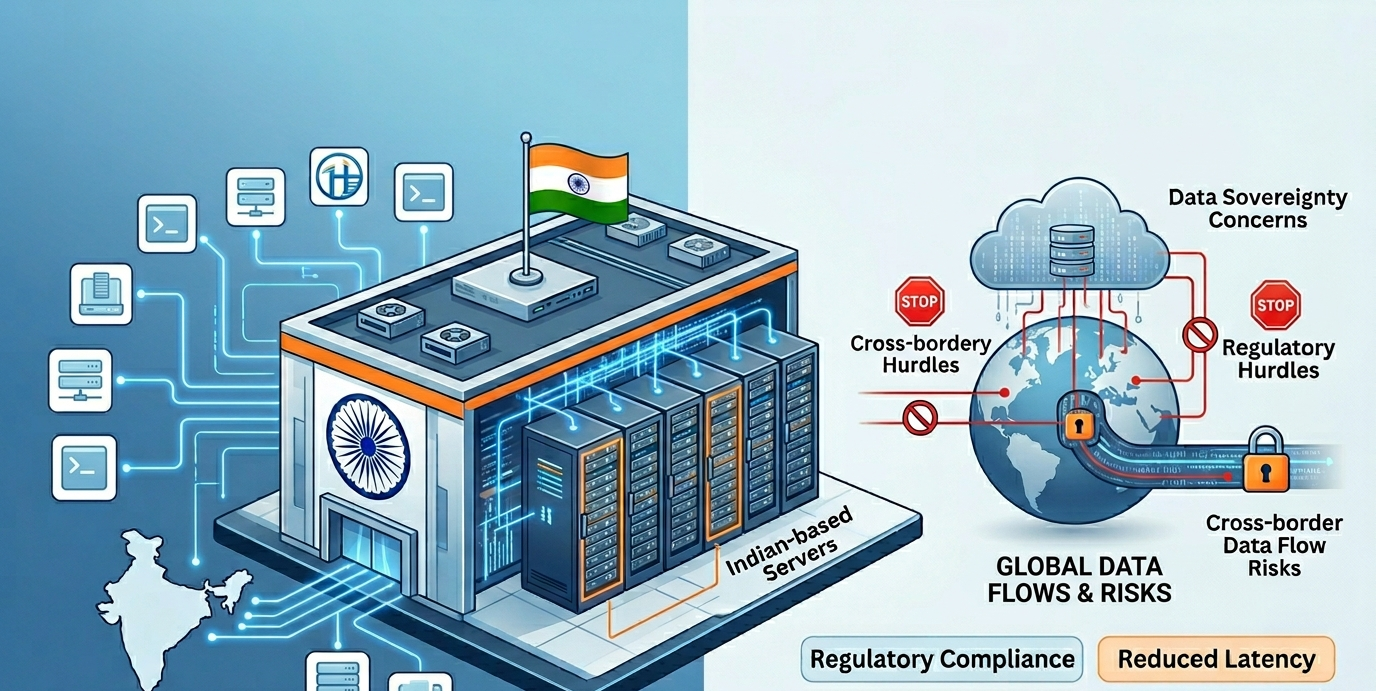
Interconnect services save cash by sharing storage or chips across sites, and add safe, locked lines that fit rules for banks or health. It ties into edge spots near users for quicker smart device info over 5G.
DCI and Hybrid Cloud
Hybrid cloud mixes your servers with cloud power, and data center interconnect bridges them easily. Jobs jump to the cloud in busy times via direct lines like AWS Connect, then back home to save bucks, skipping slow web.
Interconnect services pick the best spot, whether your place for private stuff or cloud for big jobs, with software tweaking space fast. Shops match stock across setups for sale rushes. Banks link fast trades to cloud smarts. No getting stuck with one provider as it lets you mix and match smoothly.
Key Benefits
Data center interconnect changes how things run, from quickness to smart spending.
- Performance: Small waits and priority keep videos or AI going strong.
- Scalability: Add spots easy, like plugging in lights.
- Cost Savings: Share gear to drop setup costs 40%, run cheaper.
- Security: Full locks, alerts, and backups that meet rules.
- Disaster Recovery: Live copies switch fast, no long waits.
If you have tried interconnect services, then you must have seen way fewer breaks and quick bounces back, which is real peace of mind.
Real-World Use Cases
Data center interconnect powers all kinds of work. AI spreads chip groups for huge learning jobs, like Google’s world services. Banks use it for super-fast trades where a blink loses cash, mixing floors and cloud brains.
Video networks put shows near watchers for no-lag Netflix. Smart devices send info home for city planning. Phone companies move calls smoothly. Coders test across home clusters and big clouds quickly.
Challenges and Fixes
Data center interconnect comes with a few common challenges. One major issue is to ensure reliable backups, which requires multiple network paths and compatibility between different systems. Setting up and managing these connections can also be complex, especially for growing businesses.
To handle this, many companies rely on expert service providers who simplify deployment and manage the network efficiently. Security is another important concern, so businesses use strong measures like zero-trust models, advanced encryption, and continuous monitoring to keep data safe.
Conclusion
To conclude it, data center interconnect and interconnect services help businesses connect multiple data centers in a fast, secure, and efficient way. They play a key role in making hybrid cloud environments work smoothly, thereby improving performance while keeping costs under control.
As data needs continue to grow, especially with AI and digital services, having a strong interconnect setup becomes essential for modern businesses. With the right partner, companies can simplify deployment, avoid technical challenges, and scale easily as they grow. Solutions like Nxtra by Airtel offer ready-to-use DCI networks across India, seamless hybrid cloud connectivity, and expert support. This helps businesses get started quickly and run operations without hassle.
FAQs
-
Data center interconnect links data centers with fast networks so they share data and resources like one team, thereby cutting delays and boosting efficiency.
-
Interconnect services allow businesses to mix private servers and public clouds smoothly, and jump workloads where needed without slow internet or high costs.
-
Today’s modern data center setups hit 400Gbps or more short-range, up to 800Gbps long-range with fiber tech, which is perfect for AI and real-time apps.
-
Yes, it is quite safe as it uses encryption, firewalls, and private lines to protect data end-to-end, while meeting strict rules for banks and health sectors.