Data Sovereignty in India: Why Local Data Centers Matter for Enterprises
 Apr 22, 2026
  5 min read
  Facebook
 Twitter
 LinkedIn
 Email
Email
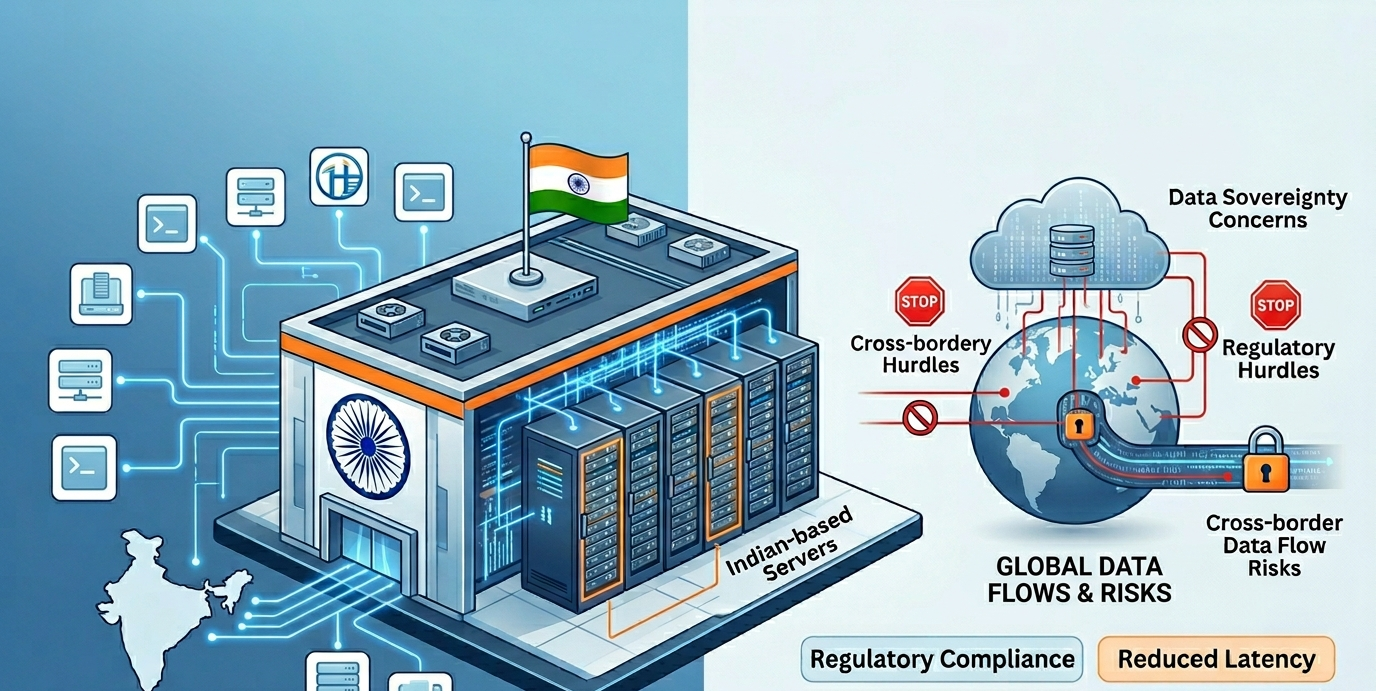
Data sovereignty in India is becoming increasingly important as businesses continue to grow in the digital space. It ensures that data generated within the country stays under Indian control, which is a key requirement for global enterprises operating here. Local data center infrastructure makes this possible by keeping data secure, compliant, and easy to access. This blog explains why this matters for businesses across the world.
What is Data Sovereignty?
Data sovereignty refers to the concept that data created, collected, or processed within a country should be stored and managed inside its borders, following local laws and regulations. In the context of data sovereignty India, this means that personal and sensitive business data cannot move freely outside the country without proper oversight.
It is not just about privacy, but also about control over digital assets. For instance, it helps prevent foreign governments from accessing Indian data through their own legal systems. For global enterprises, following these rules helps reduce legal risks and build stronger relationships in the local market.
Key Indian Laws Driving Data Sovereignty
India has built a strong legal framework to protect data. The Digital Personal Data Protection (DPDP) Act, 2023 requires companies to take user consent before using data and, in many cases, store it locally to protect user rights.
The Reserve Bank of India (RBI) guidelines require that payment and financial data of Indian users must stay within the country, which directly impacts banks and fintech companies. The Information Technology Act, 2000 (with amendments), along with CERT-In guidelines, also requires quick reporting of data breaches and strong cybersecurity practices.
Failure to follow these rules can result in heavy penalties, sometimes up to 4% of global revenue, or even restrictions on business operations. Because of this, global companies like e-commerce platforms and cloud providers are rethinking how they manage data in India.
Risks of Storing Data Outside India
When data is stored outside India, it becomes subject to foreign laws. For example, regulations like the US CLOUD Act can allow foreign authorities to access data without Indian approval. This creates compliance challenges and increases the risk of data exposure.
Latency is another issue. When data travels long distances, apps may slow down, which affects user experience, especially in sectors like gaming and financial trading.
Security risks also increase, as monitoring and response times are slower when systems are managed remotely.
In addition, any data mishandling can reduce customer trust and damage brand reputation in a highly competitive market.
Benefits for Global Enterprises
For global companies, using a local data center in India offers several advantages. It ensures faster performance with low latency, which is important for technologies like AI, video streaming, and IoT applications.
With this, compliance becomes easier, thereby helping businesses avoid penalties and legal complications. At the same time, keeping data within the country supports the local economy by creating jobs and encouraging innovation.
Industries such as healthcare and banking benefit greatly, as customers feel more confident when their data is handled safely.
Why Local Data Centers Are the Solution
A local data center physically stores and processes data within India, thereby ensuring compliance with data sovereignty requirements. Since the data stays within the country, it naturally meets regulatory expectations.
These data centers also provide very low latency, which improves the performance of applications that require quick responses.
Modern data centers are designed with advanced technologies. They use AI for efficient operations, renewable energy for sustainability, and high levels of redundancy to ensure uptime. They can also scale easily, from small edge facilities to large campuses, allowing businesses to grow without worrying about compliance issues.
Nxtra by Airtel, with its wide network of facilities, is an example of how enterprises can benefit from such infrastructure.
India’s Data Center Growth
India’s data center industry is growing rapidly, and its capacity is expected to increase significantly in the coming years, driven by technologies like 5G and AI. Government initiatives such as Digital India are also supporting the development of strong and secure digital infrastructure within the country. Large investments are being made to expand data center networks across major cities like Mumbai and Delhi.
This growth is certainly creating a strong ecosystem that offers reliable and cost-effective solutions for global enterprises entering India’s digital economy.
Role of Providers Like Nxtra by Airtel
Nxtra by Airtel plays an important role by offering a strong network of data centers across India. Their services include secure colocation and cloud solutions that align with DPDP and RBI requirements.
Their facilities are designed to improve efficiency, reduce costs, and support sustainable operations. They also focus on green energy solutions, which is important for companies that want to reduce their environmental impact.
From startups to large global enterprises, Nxtra provides solutions that support secure, high-performance data handling within India.
Future Outlook
By 2030, data sovereignty in India is expected to play a major role in shaping the country’s digital future. Regulations may become stricter, and businesses may increasingly adopt hybrid models that combine public and private infrastructure.
Companies that adopt local data strategies early would have a competitive advantage, as they can innovate faster and operate more smoothly within regulatory frameworks.
Local data center providers will continue to grow as key partners in helping businesses stay compliant and future-ready.
Frequently Asked Questions (FAQs)
What does data sovereignty mean for my business?
It means your data stays within India and follows local laws. This helps protect sensitive information and builds customer trust.
Which laws require local data storage?
The DPDP Act 2023, RBI guidelines, and the IT Act are the main ones. They require certain types of data to remain within India.
How do local data centers help global firms?
They improve speed, ensure compliance, and support better performance for applications like AI and e-commerce.
Is data sovereignty the same as data privacy?
No. Privacy focuses on how data is used, while sovereignty focuses on where the data is stored and governed