Renewable Energy in Data Centers: Building Sustainable Infrastructure in India
 Apr 22, 2026
  4 min read
  Facebook
 Twitter
 LinkedIn
 Email
Email
Powering the Future: Renewable Energy in Modern Data Centers
Data centers are at the center of this new digital shift in the world. From banking and healthcare to e-commerce and AI, almost every service we use depends on powerful servers that run 24×7. But this growing demand also means higher electricity use. Because of this, the IT industry is now moving towards cleaner energy solutions.
Renewable energy data center models, powered by sources like solar and wind, are no longer optional. They are becoming the foundation of modern, future-ready infrastructure. Learn more about the use of green power in modern data centers with the following read.
Why Data Centers Need Green Power
Traditional data centers usually depend on electricity generated from coal and gas. These sources may be reliable, but they also increase carbon emissions and air pollution. As more businesses move to cloud platforms, AI tools, and real-time systems, energy consumption is rising steadily.
This is where the shift to a sustainable data center becomes both an environmental need and a smart business move. Renewable sources like solar, wind, and green hydrogen help reduce emissions without affecting performance. No wonder, many global companies today are already running operations on 100% renewable energy, supported by long-term agreements and nearby clean energy plants.
How Renewables Power Modern Data Centers
Modern data centers use a mix of clean energy and smart systems to ensure smooth operations:
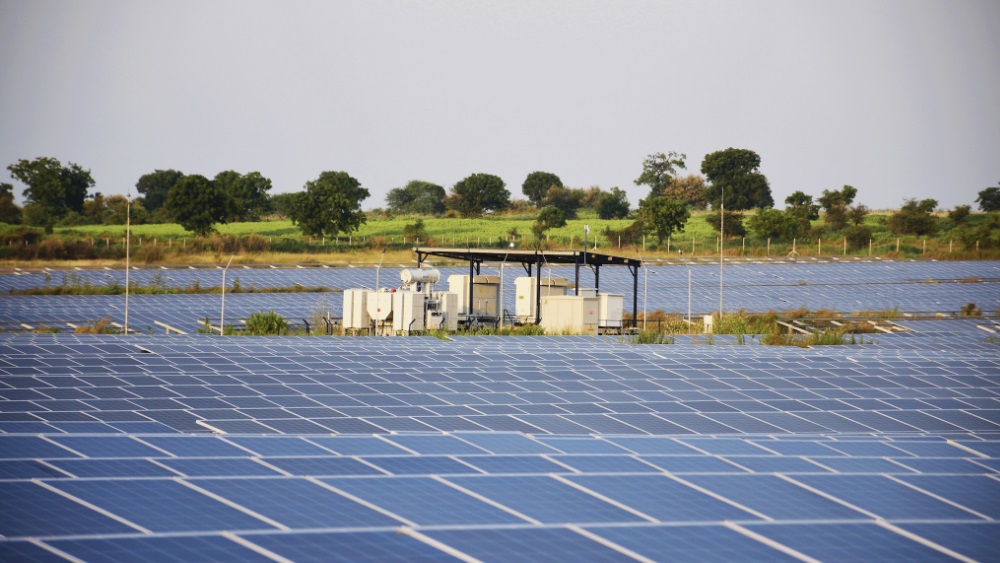
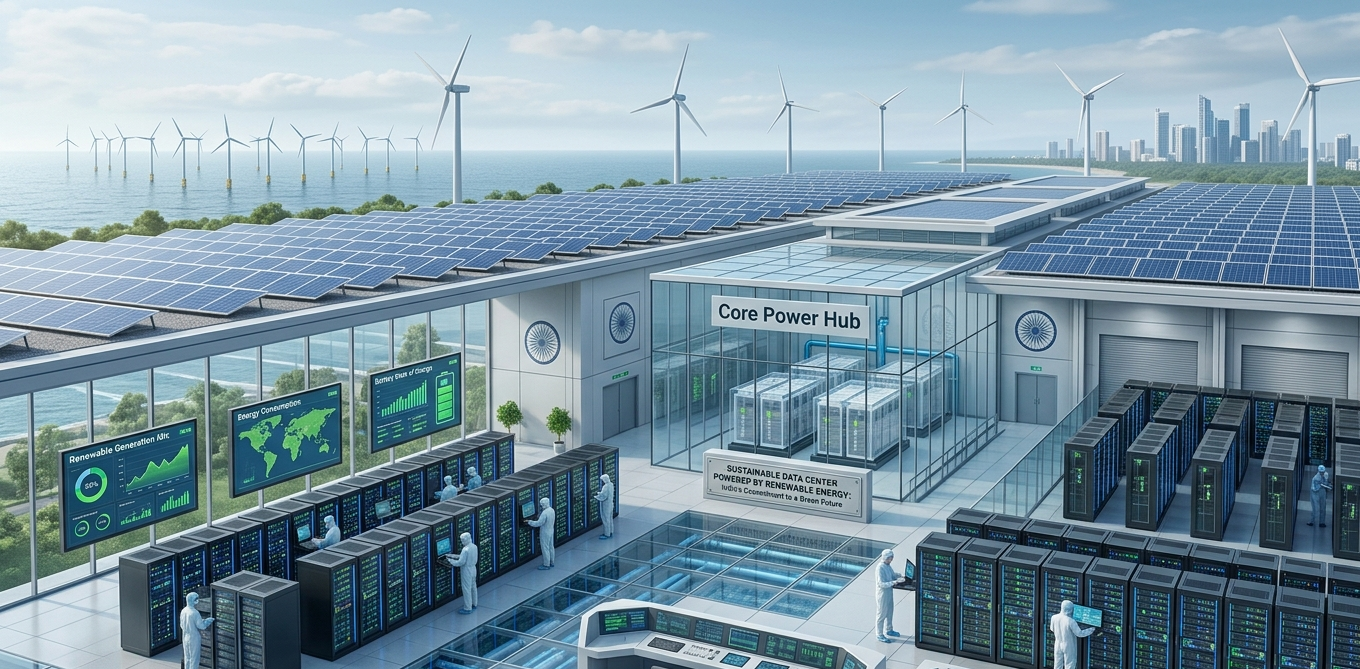
Solar farms and rooftop panels: Solar energy can be generated close to the data center through large farms or rooftop panels. This setup reduces power loss and lowers dependence on the grid.
Wind energy: Many operators partner with wind farms in high-wind regions. Offshore wind is also growing in popularity because of its steady output.
Battery storage and microgrids: Since solar and wind are not always available, energy storage systems play an important role. They store extra power and supply it when needed. In many cases, this creates a microgrid that can support operations even during outages.
Eventually, these solutions help build a renewable energy data center that can deliver clean power around the clock.
The Role of AI and High-Power Workloads
There is no doubt that AI and machine learning are driving massive growth in data centers. These systems use thousands of high-performance GPUs and servers, which increases energy demand significantly.
Because of this, building a sustainable data center has now become a top priority for companies working with AI. Hence, many large facilities now run on renewable energy from solar and wind. Some are even developing “energy campuses,” where data centers and power sources are located in the same place. This reduces transmission losses and improves efficiency.
Beyond Solar and Wind: Hydrogen and Other Clean Fuels
While solar and wind are important, they cannot meet all energy needs at all times. This is why other clean energy options are also being explored.
Green hydrogen: This is produced using renewable electricity and can act as a long-term backup power source. It has the potential to replace diesel generators in the future.
Hybrid backup systems: Modern systems combine batteries for short-term needs with hydrogen for longer outages. This improves both reliability and sustainability.
This clearly shows that the future sustainable data center will depend on a mix of energy sources, not just one.
Why It Matters for Businesses in India
India is seeing rapid growth in digital services and data usage. In this environment, choosing a renewable energy data center is no longer just about sustainability. It directly impacts business performance. Here’s how:
Cost stability: Renewable energy often becomes more cost-effective over time, especially with government support and incentives.
Regulatory and brand expectations: Customers and investors now expect companies to reduce their carbon footprint. Operating from a sustainable data center helps meet these expectations.
Energy security: Using a mix of grid power, renewables, and storage reduces the risk of disruptions caused by power shortages or fuel price changes.
Note: For businesses running AI models, cloud platforms, or critical applications, clean energy is becoming a strong competitive advantage.
How Nxtra by Airtel Is Helping Build a Greener Future
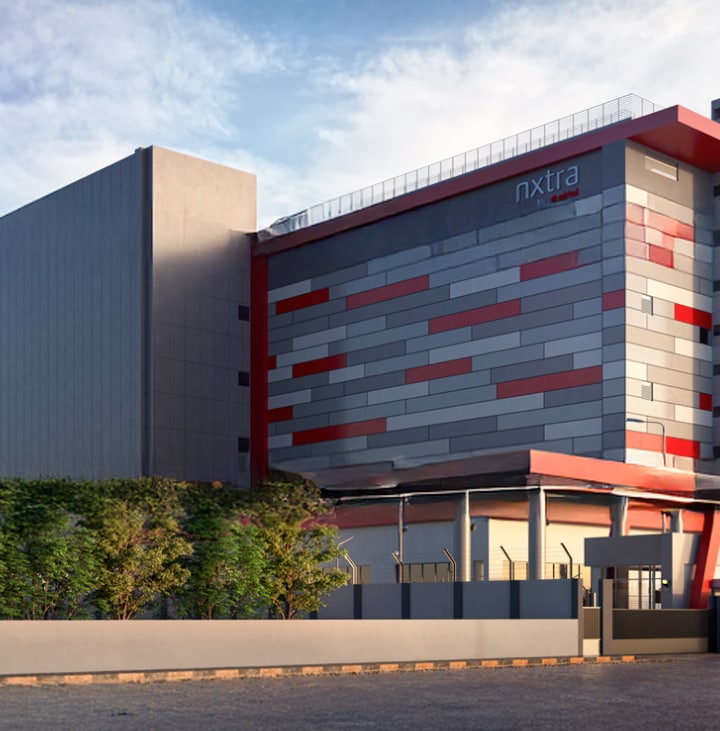
Nxtra by Airtel is taking clear steps towards building a cleaner data center ecosystem. Instead of depending only on Renewable Energy Certificates, which are often seen as a temporary solution, Nxtra is focusing on actual adoption of renewable power in its operations.
This includes long-term agreements with clean energy providers and partnerships to increase solar and wind usage.
Nxtra’s strategy is based on three key areas: smart power management, clean energy adoption, and scalable infrastructure. By combining these elements, Nxtra supports high-density workloads like AI and cloud computing while keeping emissions low.
In other words, Nxtra by Airtel is not just offering data center services. It is helping businesses move towards a more sustainable and reliable digital future.
FAQs
-
A renewable-powered data center uses electricity from sources like solar and wind instead of fossil fuels. This helps reduce carbon emissions while maintaining continuous operations.
-
Yes, many modern facilities already operate on 100% renewable energy by combining solar, wind, and storage systems.
-
It is mainly because it helps reduce environmental impact, meet regulatory requirements, and lower long-term energy costs.
-
No, renewable energy does not affect data center reliability as it is supported by batteries and backup systems, thereby ensuring stable and uninterrupted performance.