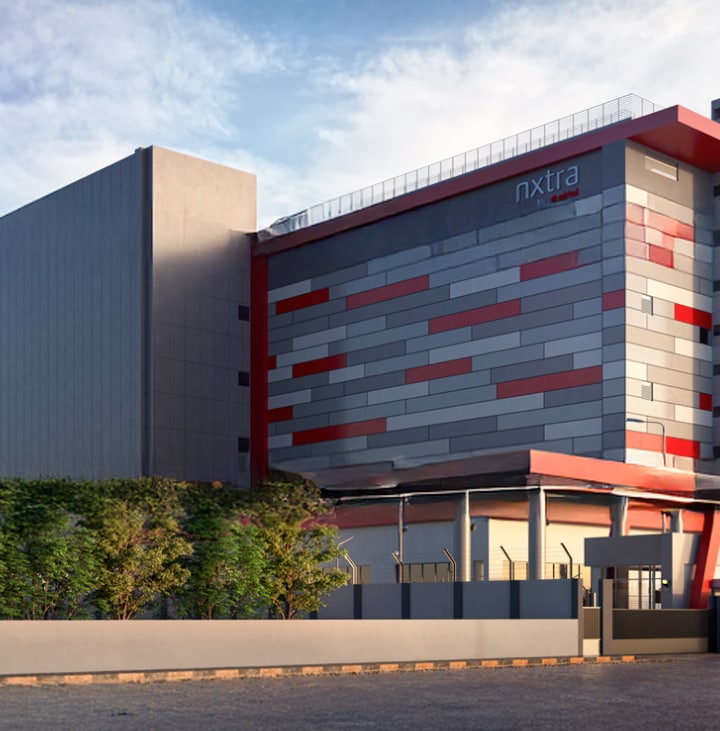
Edge Data Centres Vs Centralised Data Centers: Which Is Better for Enterprises?
 Mar 20, 2026
  5 min read
  Facebook
 Twitter
 LinkedIn
 Email
Email
Data is no longer just stored. It is generated everywhere, every second, by millions of devices, users, and sensors spread across the globe. For enterprises trying to manage this reality, the choice of infrastructure matters more than ever. Should you go with a centralized data center that gives you massive storage and control in one place? Or should you move toward an edge data center that processes data closer to where it’s actually being used? This is not a one-size-fits-all answer. Both models serve different purposes and come with their own strengths and trade-offs.
Let’s break down the differences between both with the following read and understand their advantages and offers.
What Is a Centralized Data Center?
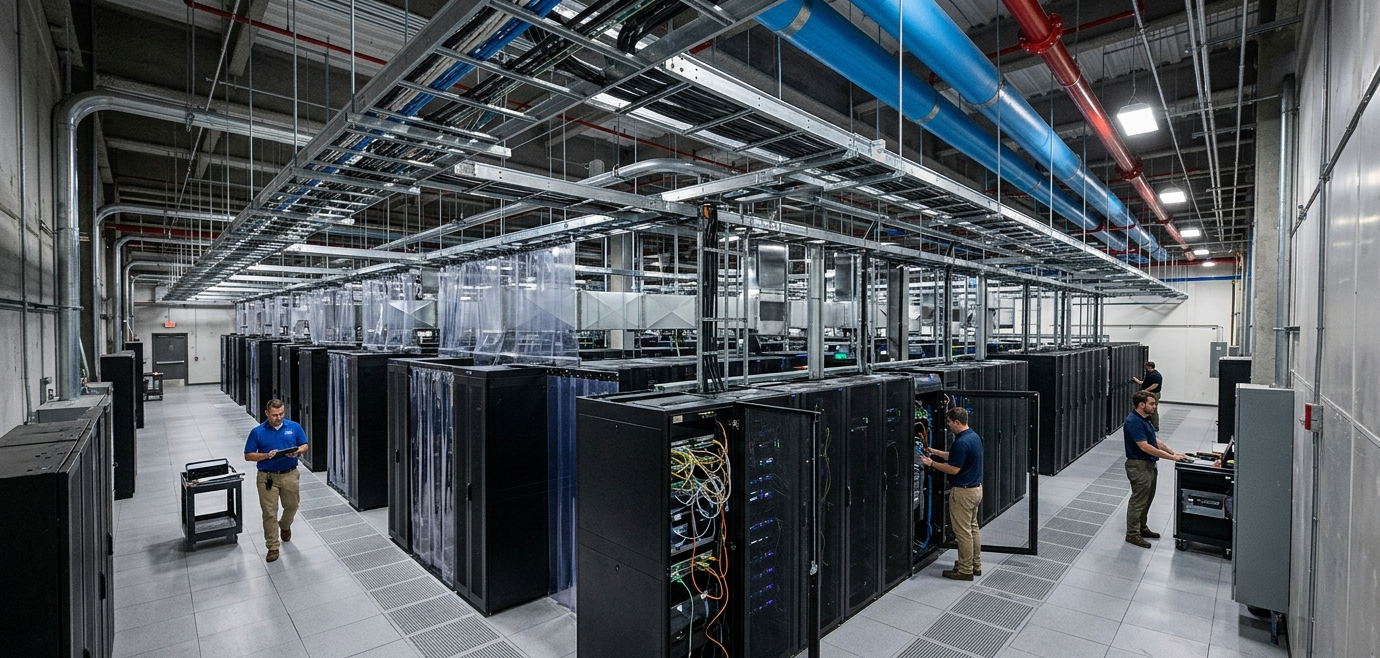
A centralized data center, often called a traditional data center, is a large facility that houses all of an organization’s servers, storage, networking equipment, and cooling systems in one or a few fixed locations.
These facilities are built for scale. They handle massive computing workloads, support hundreds of applications simultaneously, and are designed to stay operational 24/7. Major cloud providers like Amazon, Google, and Microsoft run some of the world’s largest centralized data centers to deliver their services globally.
Best suited for: Large-scale data storage, ERP systems, AI model training, batch processing, and big data analytics.
What Is an Edge Data Center?
An edge data center is a smaller, distributed facility placed physically close to end users or the devices generating data. Instead of sending data hundreds of miles to a central hub, an edge data center processes it locally, right at the “edge” of the network.
The whole point here is speed. Every time data has to travel to a distant centralized data center and return, there’s a delay called latency. For most business applications, this is manageable. But for real-time use cases like autonomous vehicles, smart factories, or live video streaming, even a few extra milliseconds can cause serious problems.
Best suited for: IoT networks, autonomous systems, 5G applications, remote operations, and real-time customer-facing services.
Edge Data Centers vs. Centralized Data Centers: A Quick Comparison
| Factor | Edge Data Center | Centralized Data Center |
| Location | Distributed, close to users/devices | Fixed centralized hub |
| Latency | Very low | Higher |
| Cost | Higher per site, lower bandwidth costs | Lower cost per unit, but higher network costs |
| Size | Small, modular | Large-scale |
| Scalability | Fast | Slower, capital-intensive |
| Security Management | Complex, as multiple sites to secure | Simpler, with one location |
| Best For | Real-time, IoT, 5G workloads | Analytics, storage, enterprise apps |
How Edge Data Centers Work
Edge data centers are strategically distributed closer to end users or devices, often at cell towers, manufacturing plants, or retail locations. They rely on distributed network architectures and edge computing technologies to minimize latency and optimize data delivery. As they are compact and modular, they can be deployed in weeks rather than years. Hence, this makes them ideal for enterprises that need to move fast and scale across multiple locations.
How Traditional Data Centers Work
Traditional data centers are centralized facilities designed to store, process, and manage large volumes of data. They feature extensive infrastructure, including servers, storage systems, networking equipment, and industrial-grade cooling, all under one roof. What they offer in power and governance, they trade off in flexibility. Expanding a centralized data center takes time, capital, and planning. That said, for complex workloads and compliance-sensitive operations, they remain the gold standard.
Use Cases for Edge Data Centers vs. Traditional Data Centers
Edge data centers are best for simple, time-sensitive processing tasks like IoT telemetry, autonomous vehicle feeds, real-time inventory systems, and 5G-dependent services where every millisecond matters.
On the other hand, centralized data centers are best for large, complex workloads like big data analytics, AI model training, ERP systems, and archival storage where computing depth matters more than response time.
Note: These two models work very well together. Edge sites handle quick, local tasks and anything too complex gets forwarded to the centralized facility.
Key Differences Between Edge and Traditional Data Centers
Location and Latency: A centralized data center sits in a fixed location, often far from end users. An edge data center sits close to where data is generated, cutting latency to just a few milliseconds.
Scalability: Expanding a centralized facility requires heavy investment and planning. Edge infrastructure scales differently. One can add more such sites as needed, plug them in, and they are live within weeks.
Cost: Centralized data centers benefit from scaling. Edge data centers cost more per site but reduce long-distance bandwidth expenses. Hence, the right answer depends on your workload and geography.
Security and Compliance: Centralized security is easier to manage as it is one location and one policy framework. Edge sites require security controls at every site, which demands stronger monitoring and centralized visibility tools.
Which One Should Your Enterprise Choose?
There is no single right answer here. The better model depends entirely on your business needs. Choose a centralized data center if your priority is large-scale storage, complex analytics, or compliance-heavy enterprise applications. Choose an edge data center if your applications are latency-sensitive, geographically distributed, or dependent on real-time processing.
Conclusion
The edge vs. centralized debate doesn’t have one winner. As IoT, 5G, and real-time applications become mainstream, enterprises that rely solely on centralized infrastructure would increasingly feel the strain of distance and latency.
But Nxtra by Airtel offers the flexibility to run both. With 120+ edge data centers and 15 hyperscale data centers across 65 cities in India, Nxtra lets enterprises manage centralized and distributed workloads under one ecosystem.
FAQs
-
No, edge data centers handle speed-sensitive tasks locally, but lack the compute power for complex workloads. Hence, most enterprises use both models together for the best results.
-
High latency slows real-time applications like fraud detection, trading systems, or connected devices. Hence, it results in performance failures or revenue loss in time-critical operations.
-
Edge data centers cost more per site but reduce bandwidth expenses significantly. For businesses with multiple locations, the overall cost often becomes similar or even lower, when compared to centralized data centers.
-
Manufacturing, retail, healthcare, telecom, and logistics benefit most from edge data centers, especially where real-time data processing or connected devices are central to business.
-
Enterprises use centralized security management tools to monitor all edge sites from one dashboard, enforcing policies, encryption, and access controls.