How Colocation Data Centers Help Enterprises Scale Without Heavy CapEx
 Aug 30, 2026
  4 min read
  Facebook
 Twitter
 LinkedIn
 Email
Email

Building and running an in-house data center is expensive. Enterprises need power backups, cooling systems, network redundancy, physical security, and a skilled team to manage it all. For most businesses, this capital investment does not make sense, especially when workloads keep changing.
This is where colocation services come in. Instead of building their own facility, enterprises rent space, power, and cooling in a shared data center while keeping full control of their own servers and applications. This model gives businesses enterprise-grade infrastructure without the upfront cost of owning it, and lets them scale up or down as their needs change.
What Is Colocation, and Why Does It Matter Now
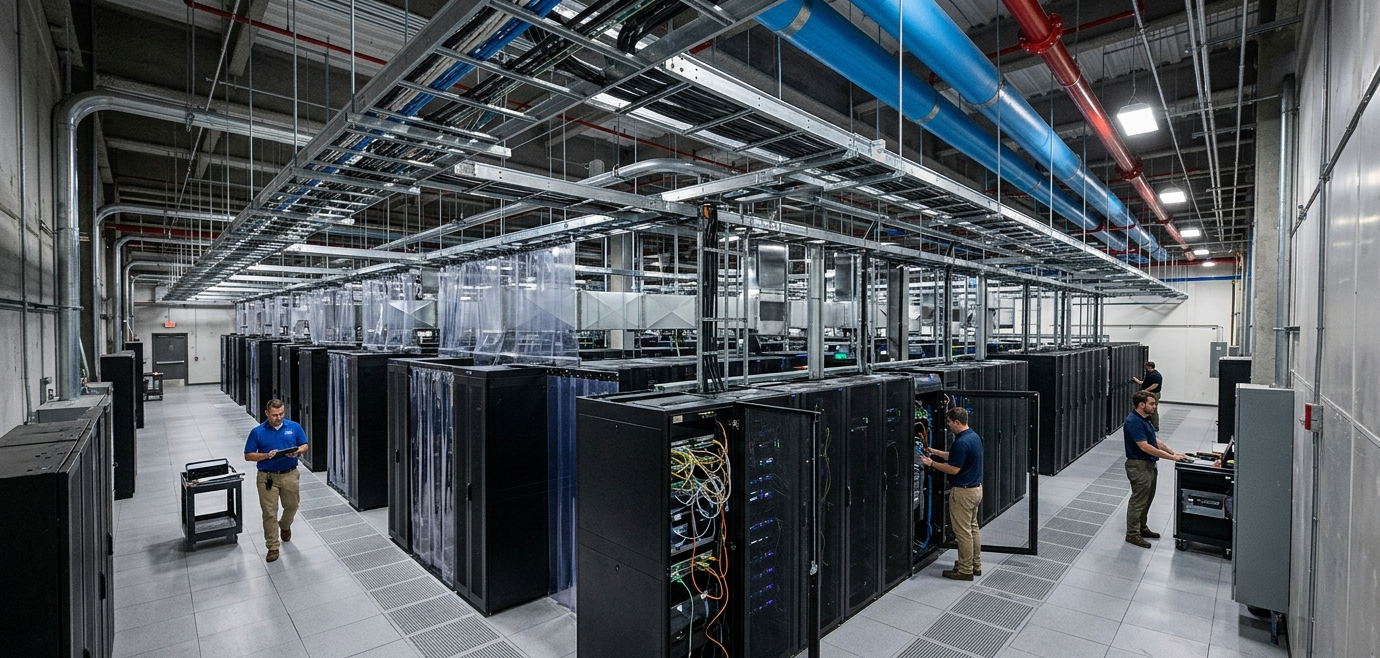
Colocation means placing your own servers and IT hardware inside a third-party data center facility. The provider takes care of power, cooling, physical security, and network connectivity, while the enterprise owns and manages its own equipment.
Demand for colocation is increasing as enterprises require more scalable, connected and professionally managed infrastructure. Growth is being driven by rising data volumes, high-density computing, digital services and the need to modernise ageing enterprise data center environments.
For enterprises, this shift is not just about cost. It is about speed, reliability, and the ability to grow without being tied to a fixed physical setup.
The CapEx Problem With Owning a Data Center
Setting up a private data center means spending heavily before a single workload goes live. Enterprises need to pay for land, building construction, backup generators, UPS systems, cooling infrastructure, fire suppression, and network links. On top of this, there are ongoing costs for maintenance, upgrades, and specialized staff.
Owning a data center may be appropriate for organisations with sufficient scale, specialised requirements and long-term capacity certainty. For many enterprises, however, changing demand can make it difficult to forecast infrastructure requirements and justify large investments in fixed facility capacity.
How Colocation Removes Facility CapEx
Colocation shifts responsibility for building and operating the underlying facility to the provider. Enterprises pay for contracted space, power, cooling and associated services while continuing to own or lease their IT equipment. This reduces the capital required for land, construction and supporting facility infrastructure.
This shift from CapEx to OpEx changes how businesses plan their budgets:
- No large upfront investment in land or construction
- No need to forecast infrastructure needs years in advance
- Predictable monthly or contract-based costs
- Freed-up capital that can be used for core business growth instead of infrastructure
For CFOs and IT leaders, this means infrastructure spending becomes an operating expense tied directly to usage, not a fixed asset that depreciates over time.
Scaling Without the Wait
One of the biggest advantages of colocation is speed of scaling. Adding capacity in a private data center can take months, from planning and procurement to construction and testing. In a colocation facility, enterprises can add rack space, power capacity, or network bandwidth in a matter of weeks.
This matters more today than ever, as workloads tied to AI, analytics, and real-time applications can grow unpredictably. A retail business preparing for a seasonal sale, or a fintech company rolling out a new product, cannot afford to wait months for infrastructure to catch up with demand.
Reliability and Compliance Without Building Everything In-House
Running a data center is not just about hardware. It requires meeting uptime targets, security certifications, and compliance standards like data localization or industry-specific regulations. Building this expertise in-house takes years.
Colocation providers already operate facilities built to recognized reliability standards, often Tier III or Tier IV, with redundant power and cooling systems. Enterprises get access to this reliability immediately, along with compliance support, without having to build the expertise themselves.
How Nxtra by Airtel Supports This Shift
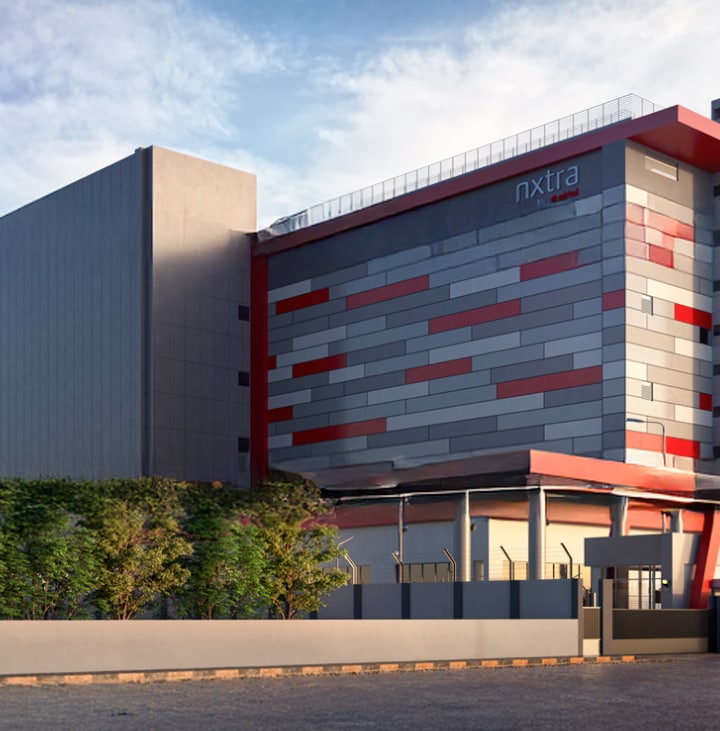
Nxtra by Airtel operates data centers built for exactly this kind of enterprise scaling need. With a wide network of facilities across India, Nxtra gives enterprises access to reliable, high-density colocation space along with strong network connectivity through Airtel’s backbone.
Businesses looking to move away from heavy infrastructure spending can plug into Nxtra’s colocation offerings and scale capacity as their workloads grow, without the burden of designing, building, and running a facility themselves.
FAQs
-
Colocation reduces the upfront investment required for land, construction, power, cooling, physical security and other facility infrastructure. Enterprises pay for contracted space, power and supporting services while continuing to control their own IT equipment.
-
No, colocation is used by businesses of all sizes. Smaller enterprises benefit from access to enterprise-grade infrastructure without needing the capital or expertise to build it themselves.
-
Colocation facilities can provide physical security, operational controls and recognised certifications that support an enterprise’s compliance programme. However, using a certified facility does not automatically make the enterprise compliant. The customer remains responsible for its equipment, applications, data and industry-specific obligations.
-
Scaling timelines depend on available rack and power capacity, equipment readiness, connectivity provisioning and contractual requirements. Colocation can be faster than expanding a self-owned facility because the underlying data center infrastructure is already operational.