The Role of Data Center Interconnect in Building a Connected Digital Ecosystem
 Aug 20, 2026
  4 min read
  Facebook
 Twitter
 LinkedIn
 Email
Email

As businesses spread their workloads across multiple locations, cloud platforms, and edge sites, the need for fast, secure communication between data centers has never been greater. Data Center Interconnect (DCI) is the technology that links two or more data centers, letting them share data, workloads, and applications almost instantly. This creates one large, interconnected network instead of several isolated ones. For enterprises running cloud services, AI workloads, or disaster recovery systems, DCI has become the backbone that keeps everything connected, fast, and resilient.
What Is a Data Center Interconnect?
Data Center Interconnect refers to the networking technology, hardware, and software that connects separate data centers so they can function as one system. Instead of each facility operating on its own, DCI links them through high-capacity optical fiber networks, allowing data to move between sites with very low latency.
This connectivity can span short distances within a city (metro DCI) or long distances across states and countries (long-haul DCI). Both play a role in building an interconnected network that supports modern digital operations.
Why DCI Matters for a Connected Digital Ecosystem
Modern enterprises rarely rely on a single data center. Workloads are often split across multiple facilities for reasons like redundancy, compliance, or proximity to users. Without a strong interconnect layer, these facilities would work in silos, creating delays and increasing the risk of data loss.
DCI solves this by enabling:
- Seamless data mobility: Applications and workloads can move between data centers without disruption, thereby supporting hybrid and multi-cloud strategies.
- Disaster recovery and business continuity: If one facility faces an outage, DCI allows operations to shift to another site quickly, minimizing downtime.
- Lower latency for real-time applications: Financial services, streaming platforms, and AI applications need near-instant responses. DCI reduces the distance data has to travel logically, even when facilities are geographically apart.
- Support for AI and high-density workloads: AI training and inference often require multiple data centers working together. High-capacity DCI links make this possible without bottlenecks.
The Technology Behind DCI
Several technologies work together to make interconnection reliable and scalable:
- Coherent optical transport, which allows large volumes of data to travel over long distances without losing quality
- High-capacity pluggable optics, including 400G and increasingly 800G modules, which pack more bandwidth into existing fiber infrastructure
- Software-defined networking, which allows enterprises to manage and reroute traffic dynamically based on demand
- Encryption at the optical layer, which protects data as it moves between facilities, an increasingly important requirement as data privacy regulations tighten globally
Together, these technologies allow enterprises to treat multiple data centers as a single, unified infrastructure rather than disconnected buildings.
Market Growth Reflects Rising Demand
Industry research points to strong and consistent growth in the DCI space, driven largely by hyperscale cloud expansion, rising AI workloads, and growing demand for multi-cloud connectivity. Analysts expect the market to continue expanding through the rest of the decade, with much of the growth concentrated in metro-scale interconnects as hyperscalers build out large AI-focused campuses that need to “scale across” multiple sites. Asia Pacific has emerged as one of the fastest-growing regions for DCI adoption, supported by expanding digital economies and rising data center density in the region.
This growth certainly shows that DCI is no longer a niche networking function. It is becoming a core requirement for any enterprise operating at scale.
Building an Interconnected Network: Key Considerations for Enterprises
When enterprises plan their DCI strategy, a few factors matter most:
Bandwidth requirements: As AI and data-heavy applications grow, bandwidth needs increase. Enterprises should plan for scalability rather than just current demand.
Latency sensitivity: Applications like trading platforms or real-time analytics need ultra-low latency, which affects how facilities should be interconnected.
Security and compliance: Cross-border data flow regulations mean encryption and compliance need to be built into the interconnect layer from the start.
Redundancy and resilience: A well-designed interconnected network avoids single points of failure, ensuring that one facility’s issue doesn’t affect the entire ecosystem.
Scalability: Confirm how quickly bandwidth and additional locations can be added as requirements grow.
How Nxtra by Airtel Supports a Connected Digital Ecosystem
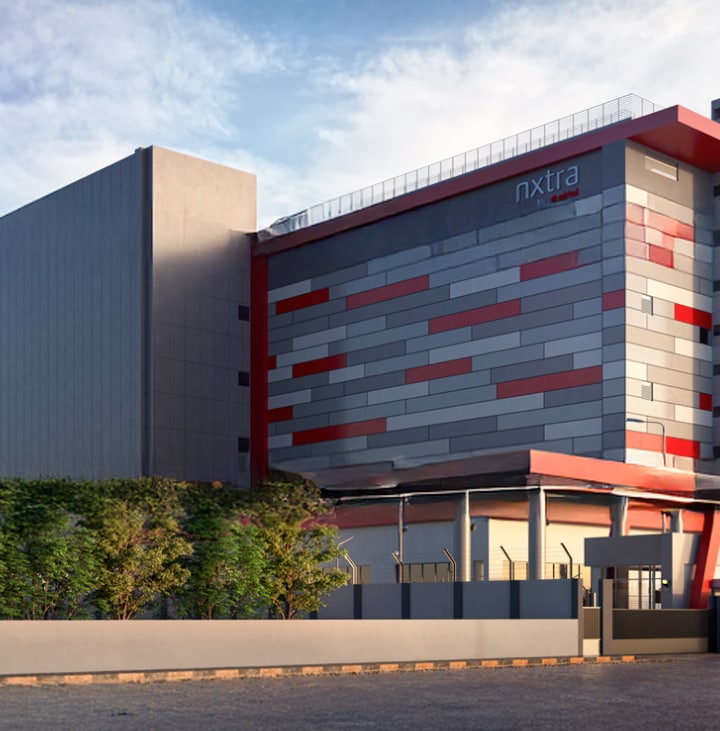
Nxtra by Airtel operates a robust network of data centers across India, that are designed to support enterprises building modern, interconnected digital infrastructure. With high-capacity connectivity between facilities, Nxtra enables businesses to run multi-site operations smoothly, whether that means supporting hybrid cloud setups, enabling disaster recovery, or powering AI workloads that need fast, reliable data movement between locations.
By combining strong physical infrastructure with dependable interconnect capabilities, Nxtra by Airtel helps enterprises reduce latency, improve resilience, and scale their digital operations without worrying about connectivity bottlenecks.
FAQs
-
DCI is the technology that connects two or more data centers, allowing them to share data, applications, and workloads with minimal delay, effectively working as one connected system.
-
DCI supports data replication, distributed applications, business continuity and communication between facilities. Its effectiveness depends on the bandwidth, latency, security and resilience of the overall architecture.
-
DCI can support AI environments by enabling the transfer and replication of large datasets between facilities. However, tightly coupled AI training may require specialised, extremely low-latency connectivity within a data center or campus.
-
While hyperscalers and large enterprises are major adopters, growing mid-sized businesses using multi-cloud or hybrid setups also benefit from DCI, especially when disaster recovery and low latency matter to their operations.