What Are Data Center Tiers? Explained for Enterprises (Tier I–IV)
 May 15, 2026
  4 min read
  Facebook
 Twitter
 LinkedIn
 Email
Email
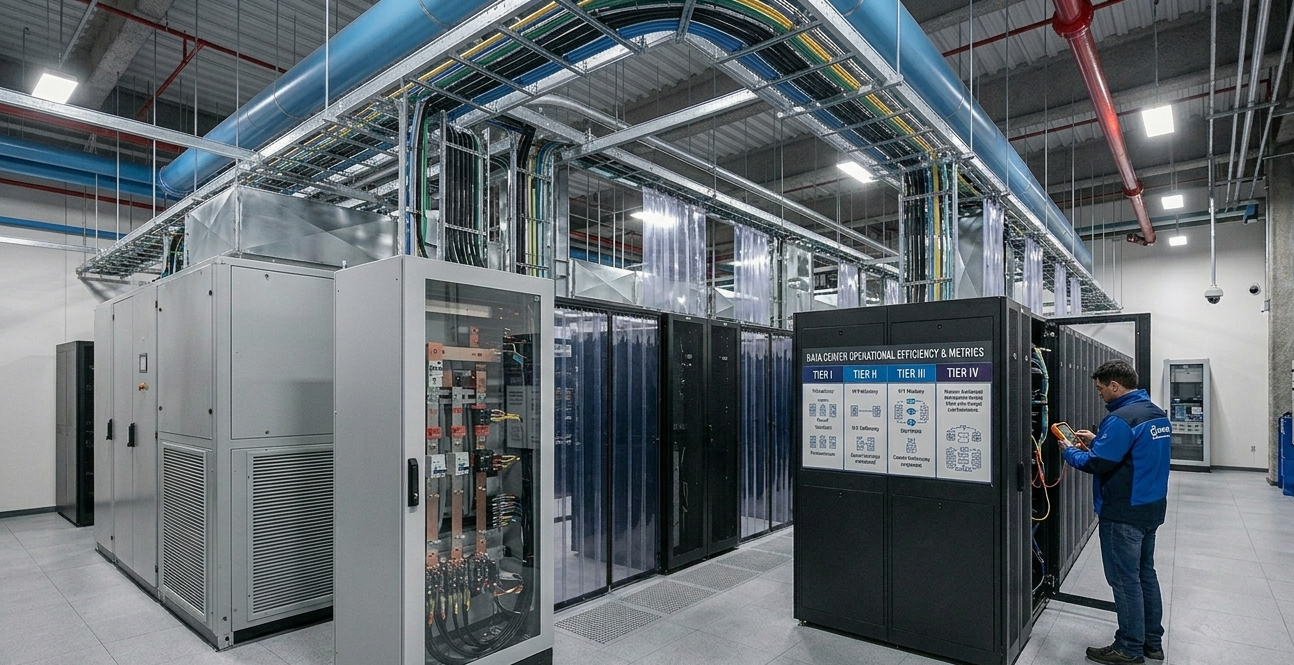
Data center tiers are a simple and standardized way for enterprises to understand how reliable and resilient a data center is. Ranging from basic Tier I to advanced Tier IV, as defined by Uptime Institute standards, these tiers help businesses choose infrastructure based on uptime, redundancy, and performance needs.
For enterprises running critical applications like cloud services or e-commerce platforms, choosing the right tier can directly impact downtime, costs, and customer experience.
What Are Data Center Tiers?
Data center tiers classify facilities based on the strength of their power, cooling, and network systems. Developed by the Uptime Institute, this system helps predict uptime and fault tolerance levels.
In simple terms, data center tiers work like reliability levels, starting from basic setups (Tier I) to highly advanced and fault-tolerant systems (Tier IV).
Each tier builds on the previous one. Higher tiers include all the features of lower tiers, along with additional redundancy and protection. This allows businesses to scale their infrastructure as they grow.
Tier I: Basic Infrastructure
Tier I is the most basic level of data center infrastructure. It includes a single power source and a non-redundant cooling system.
- Expected uptime: 99.671%
- Annual downtime: 28.8 hours
Since there is no redundancy, any failure or maintenance activity can stop operations completely.
This tier is suitable for small startups, testing environments, and development labs. It is cost-effective and easy to set up, but not ideal for live or business-critical applications.
Tier II: Basic Redundancy Added
Tier II improves reliability by introducing N+1 redundancy, which means backup components are available.
- Expected uptime: 99.741%
- Annual downtime: 22 hours
Though backup components exist, the system still relies on a single distribution path, so some downtime during maintenance is unavoidable.
This tier is suitable for growing SMBs, internal business applications, and basic web hosting. It offers a good balance between cost and reliability, making it a step up from Tier I.
Tier III: Maintenance Without Downtime
This is where reliability becomes enterprise-grade. Tier III data centers are concurrently maintainable, which means systems can be serviced without shutting down operations.
- Expected uptime: 99.982%
- Annual downtime: 1.6 hours
They use multiple independent distribution paths, thereby ensuring continuous operation even during maintenance. This tier is suitable for banking and financial services, E-commerce platforms, and SaaS companies.
Tier IV: Full Fault Tolerance
Tier IV represents the highest level of reliability in data center tiers.
- Expected uptime: 99.995%
- Annual downtime: 26 minutes
It includes 2N+1 redundancy, which means fully independent systems with additional backups. This tier is suitable for global financial institutions, government systems, and AI and mission-critical workloads.
Even during multiple failures or unexpected events, operations continue without interruption. However, this level comes with the highest cost and complexity.
This comparison clearly shows how higher tiers reduce downtime while increasing cost and complexity.
How to Choose the Right Data Center Tier
Choosing the right tier depends on your business needs.
First ask yourself how much downtime your business can afford? And what is the financial impact of outages? For example, e-commerce businesses lose revenue every minute their systems are offline.
Here, key considerations include:
- Growth plans and scalability
- Compliance requirements (like GDPR)
- SLA expectations
- Budget
For most enterprises, Tier III offers the best balance between cost and reliability. However, businesses with critical workloads may prefer Tier IV.
Understanding the Certification Process
The Uptime Institute offers two main certifications:
- Tier Certification of Design Documents (TCDD)
- Tier Certification of Constructed Facility (TCCF)
These certifications ensure that both the design and actual infrastructure meet the required standards.
Enterprises often prefer certified data centers because they reduce vendor risk, support compliance needs, and ensure consistent performance.
Regular recertification helps maintain these standards over time.
Real-World Benefits of Data Center Tiers
Higher-tier data centers provide several advantages:
- Reduced financial losses due to downtime
- Support for 24/7 operations
- Better performance for cloud and hybrid environments
- Improved customer experience
For Indian enterprises, using local Tier III data centers can also reduce latency and improve service delivery.
Conclusion
Data center tiers (Tier I to Tier IV) help enterprises choose the right level of reliability and performance based on their business needs. Each tier adds more redundancy and reduces downtime risk.
While Tier I and II are suitable for smaller or less critical workloads, Tier III and IV are designed for enterprise-level operations.
FAQs
-
Data center tiers are defined by redundancy, power systems, cooling, and uptime standards set by the Uptime Institute. They range from basic (Tier I) to highly fault-tolerant (Tier IV).
-
A Tier 3 data center allows maintenance without shutting down operations. It uses multiple power and cooling paths, thereby ensuring continuous availability.
-
Tier III supports maintenance without downtime, while Tier IV can handle multiple failures without any disruption. Tier IV offers higher reliability but at a higher cost.