Edge Computing Explained: Meaning, How It Works, Benefits, Examples & Applications
 Nov 5, 2026
 9 min read
 Facebook
 Twitter
 LinkedIn
 Email
Edge computing places compute, storage and analytics close to where data is created, so applications respond faster and less traffic crosses the network. This guide explains the architecture choices behind it and edge computing examples that matter to enterprises.
Key Takeaways
- Edge computing is a placement decision: run time-sensitive work near users and machines, and keep heavy storage and analytics in core facilities.
- Distance sets a latency floor. Light in fibre covers about 200 km per millisecond, so a server 1000 km away adds roughly 10 ms of round-trip delay before any processing begins.
- Edge and cloud form one architecture, and most enterprises need both.
- OTT, manufacturing and BFSI are where the edge pays off most clearly in India.
- Edge data centers give these workloads a physical facility, and the provider you pick affects uptime, security and cost.
What Is Edge Computing?
Edge computing is the practice of bringing storage and computing power closer to the devices that produce data and the people who use it. In the older model, sensors, phones and machines sent raw data to a central data center for processing. The scale and complexity of data have now outpaced what networks can carry. The approach is best described as a distributed computing framework that places enterprise applications near data sources such as IoT devices or local edge servers.
The rise in connected devices is also driving demand for edge computing. Projections show connected IoT devices growing from 19.8 billion in 2025 to 40.6 billion by 2034.
How Does Edge Computing Work?
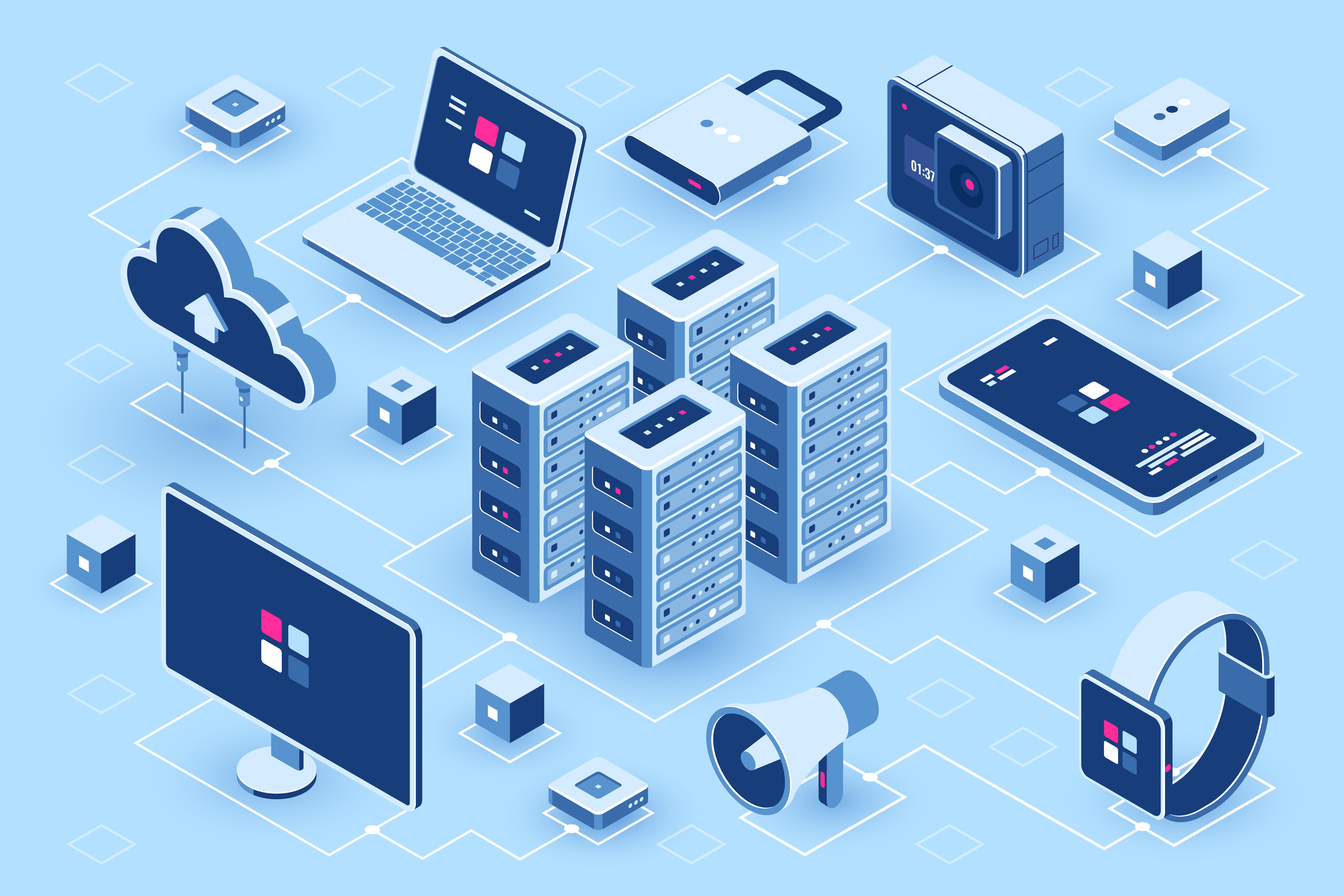
An edge setup usually has six building blocks:
- Edge devices: sensors, cameras, robots and phones that collect and act on data at the source.
- Edge gateways: routers, servers or SD-WAN devices that sit between the devices and the cloud and manage traffic.
- Network infrastructure: the links, often 5G, that carry data between edge, cloud and on-premises sites.
- Software and analytics: tools that process data and orchestrate workloads across locations.
- Edge servers and clusters: local compute and storage for latency-sensitive work.
- Cloud or central data center: where heavier storage and deeper analysis happen.
Here is how these components work together. Take a sensor that measures room temperature every five minutes. Such readings fall into three groups: redundant data that can be dropped, useful data worth keeping long term (like an average over a few hours), and data with immediate consequences (like the temperature at which a heater must switch on). The edge layer filters these locally and sends only the critical information onward. This is called the upstream pattern, where data moves from the edge towards the central system. In the downstream pattern, information or content moves in the other direction, such as when a streaming service delivers video to users.
What Are the Different Types of Edge Computing?
The right edge setup depends on where data is generated and how quickly it needs to be processed.
- Local on-premises edge: servers and storage placed next to the data source, such as server racks installed inside a wind turbine.
- Device edge: sensors and machines with enough compute to filter data using preset rules before sending it.
- Regional edge: cloud services localised to run on edge servers within a specific region.
- Content caching: a content delivery network (CDN) stores content on servers near users so it loads faster.
- Mobile edge: 5G networks and mobile cloud services support applications that need very low latency.
Fog computing adds an intermediate layer between devices and the cloud, handling work that is too heavy for individual devices.
Edge Computing vs. Cloud Computing: Key Differences
Cloud computing runs workloads in a provider’s central data centers and covers almost every kind of workload. The edge runs the workload closer to devices and users. In practice, edge and cloud computing usually work together. Both rely on virtualization, containers and microservices, and cloud providers now sell edge services too.
| Factor | Edge Computing | Cloud Computing |
| Processing location | Near the data source | Central, remote data center |
| Latency | Very low | Higher, depends on distance |
| Bandwidth use | Low, only filtered data moves | Higher, raw data often travels |
| Best suited for | Real-time, local decisions | Large-scale storage and deep analytics |
| Dependence on connectivity | Can keep working with weak links | Needs a stable connection |
What Are the Key Benefits of Edge Computing?
- Predictable latency: Response times stay steady during peaks because requests do not cross the country.
- Lower network spend: Local filtering cuts the volume sent to cloud regions, which trims bandwidth and egress charges.
- Data control: Sensitive records can stay in a defined location, which helps with residency and audit requirements.
- Continuity: A site can keep serving users when the link to the core is slow or down.
- Better cloud economics: The cloud handles what it does best, with less raw data to store and process.
What Are the Challenges of Edge Computing?
Scale is one of the biggest challenges. A large organisation can run thousands of edge devices, which makes deployment, provisioning and monitoring harder. Edge devices also have limited compute and storage, so they cannot host every workload. Connectivity at remote locations can be unreliable too.
Security is another challenge that needs attention. Every added site is one more place to protect, and edge environments increase complexity and exposure. Management platforms that automate provisioning and monitor security help here. Pairing the edge with 5G keeps systems running when the regular internet connection drops.
Edge Computing Use Cases and Real-World Examples
OTT and CDN: Live sports are the stress test. JioHotstar recorded a world-record 72.5 million concurrent viewers during the T20 World Cup. Serving that load from a single origin is impractical, so streaming platforms cache video segments in metro and edge facilities close to viewers. This keeps start times short and protects origin servers.
Manufacturing: Unplanned downtime costs the world’s 500 biggest companies an estimated $1.4 trillion a year, or 11% of revenues, and $2.3 million an hour in automotive. Edge nodes on the plant network run vision inspection and vibration analytics beside the line, so a fault triggers a decision in milliseconds. Only summaries travel to the core for trend analysis.
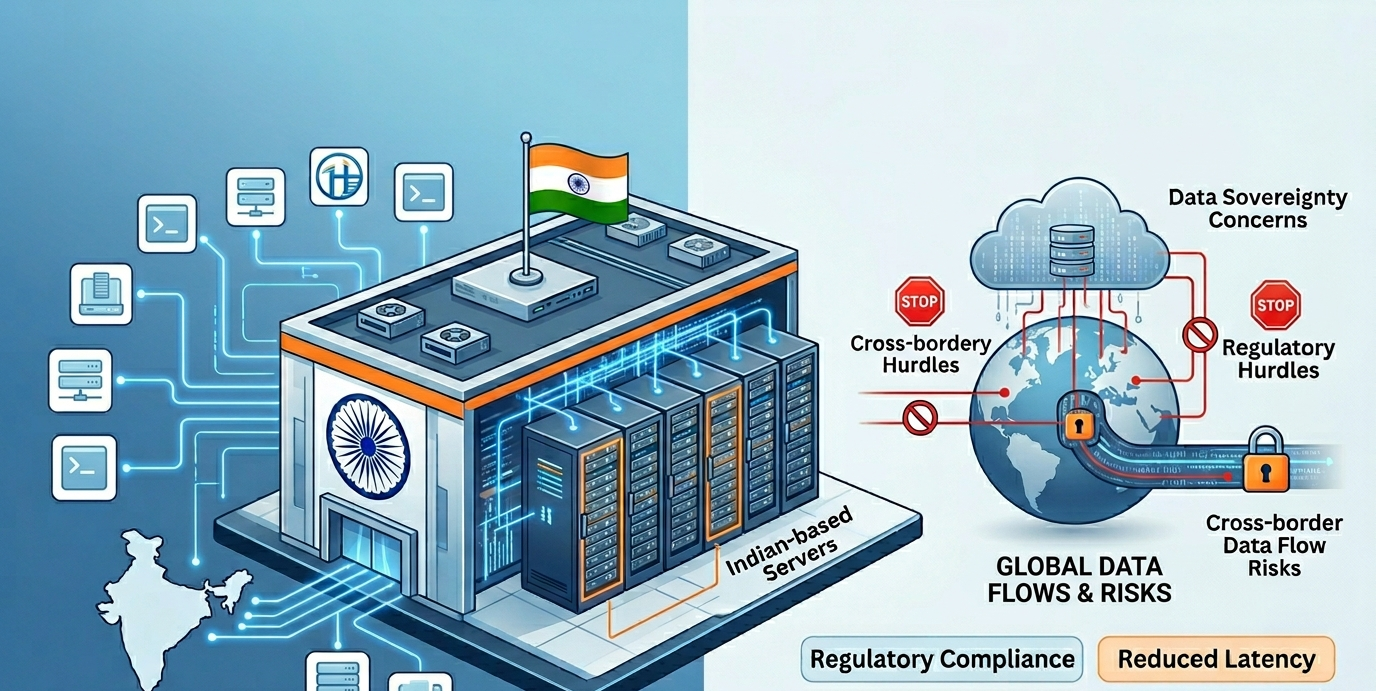
BFSI: UPI processed 24.07 billion transactions in September 2026, about 802 million a day. At that volume, fraud scoring and authentication must finish in milliseconds. RBI’s 2018 directive on payment data also requires payment system data to be stored only in India, so in-country edge and core facilities suit these workloads.
What Is Edge AI and How Does It Work?
Edge AI runs machine learning directly on connected edge devices. For instance, a camera on a production line can flag a defective part on the spot, without a round trip to the cloud. This reduces dependence on centralised infrastructure and, unlike cloud-based approaches, lets devices keep working offline.
The growing interest in edge AI is also reflected in market forecasts. Edge AI is valued at USD 35.81 billion in 2025 and is projected to reach USD 385.89 billion by 2034, a compound annual growth rate of 29.9%.
What Is the Role of Edge Data Centers in Edge Computing?
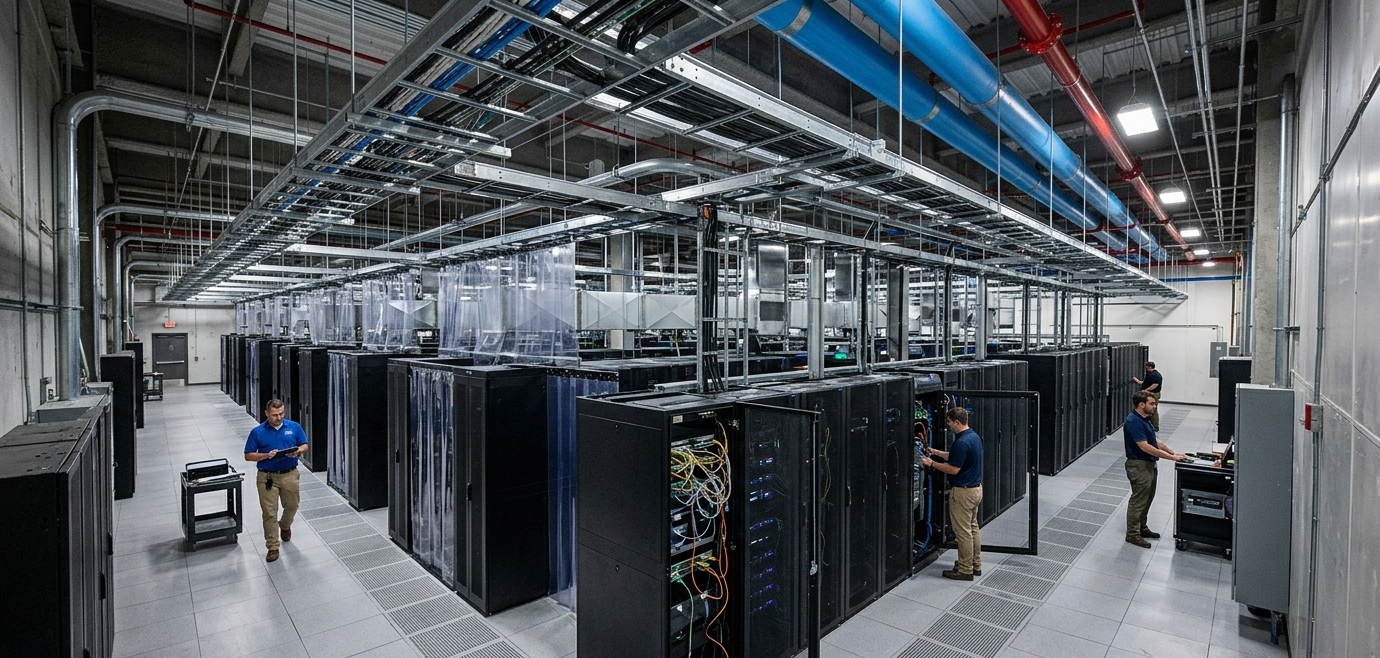
Edge workloads still need physical infrastructure. Edge data centers provide the servers, storage and networking needed to run these workloads closer to users and devices. Larger or less time-sensitive workloads can continue to run from central data centers.
In India, 5G, IoT and latency-sensitive applications are driving edge data center growth beyond the metros, into Tier II and Tier III cities such as Lucknow, Bhubaneswar, Kochi and Jaipur. India added 258 MW of new data center capacity in the first half of 2026, taking operational capacity to 1.8 GW IT, with projections of more than 7 GW by 2030.
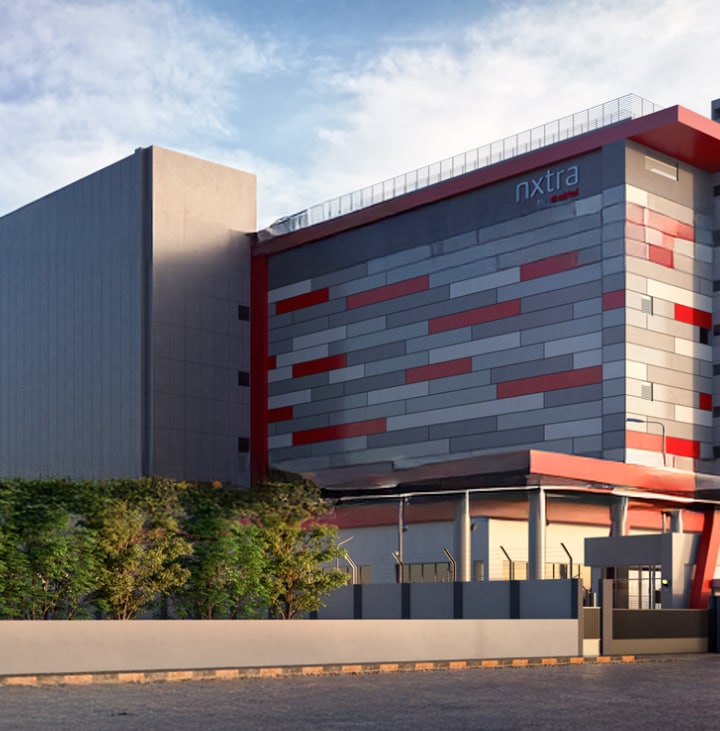
Even smaller edge facilities need reliable power, cooling, security and connectivity. A provider with an established network of sites can therefore make it easier to deploy edge infrastructure across different locations. Nxtra by Airtel, for example, runs more than 120 edge facilities across India.
What Should Enterprises Look for in an Edge Data Center Provider?
- Reach: Sites close to your users, plants or branches, with room to add locations as demand shifts.
- Network: Multiple fibre routes, carrier-grade connectivity and direct links to core data centers and cloud on-ramps.
- Resilience: Check the tier rating and redundancy. Under the widely used data center tier ratings, Tier III allows about 1.6 hours of downtime a year and Tier IV about 26 minutes.
- Power and cooling: Capacity for today’s racks and for the higher density that AI inference needs.
- Security and compliance: Physical access controls, ISO/IEC 27001 and SOC 2 certification, and clear data residency terms.
- Operations: 24×7 monitoring, remote hands and defined SLAs, so lean teams are not stretched across sites.
- Sustainability: Renewable energy sourcing and efficiency targets that support your own ESG reporting.
- Commercial flexibility: The ability to start with a few racks and scale without renegotiating.
How Nxtra’s Data Center Infrastructure Supports Edge Computing
Nxtra by Airtel is one of India’s leading data center providers, delivering secure, scalable and sustainable digital infrastructure to hyperscalers, enterprises, cloud service providers and government organisations. Backed by Airtel’s extensive connectivity ecosystem and telecom expertise, Nxtra operates a nationwide network of 15 AI-ready large data centers and over 120 edge data centers, enabling businesses to deploy mission-critical workloads with reliability, connectivity and scale.
Its portfolio includes colocation, hyperscale and edge data center solutions, supported by robust infrastructure and operational excellence. With a commitment to achieving net-zero emissions by 2031, Nxtra integrates sustainability into its data center design and operations, helping customers scale their digital infrastructure responsibly.
This allows businesses to run latency-sensitive workloads closer to users while keeping larger storage and analytics workloads in core data centers. Nxtra is also the first data center company in India to deploy AI at scale for predictive maintenance, energy efficiency and automated operations.
What Sets Nxtra by Airtel Apart?
- Trusted Airtel legacy: Airtel’s telecom expertise and connectivity ecosystem bring carrier-grade reliability and operational discipline to enterprise data center infrastructure.
- Nationwide footprint: 15 large data centers and 120+ edge facilities let businesses deploy closer to end users, cut latency and scale across locations.
- Sustainability by design: A commitment to net-zero emissions by 2031, with renewable energy and resource-efficient practices built into operations, helps enterprises advance their own sustainability goals.
FAQs
-
Streaming platforms caching live sports close to viewers, factory lines that inspect parts with on-site cameras and banks scoring transactions for fraud in milliseconds are common examples. Self-driving vehicles and remote patient monitors also rely on it.
Is edge computing the same as IoT?
No, IoT is the network of connected devices that generate data. Edge computing is the approach that processes that data near its source. IoT often depends on the edge, but the edge also serves uses like CDN caching. -
No, edge computing is used for tasks that need a quick response near the data source, while the cloud is better suited for storing large amounts of data and running detailed analysis. In most cases, both work together. The edge handles data locally and sends the relevant information to the cloud.
-
Yes, it can be secure. Keeping data local limits exposure, and information can be encrypted before it goes to the cloud. However, more sites mean more points to protect, so access controls, monitoring and regular patching remain essential.