What is a Data Center and How Does It Work?
 Feb 27, 2026
  7 min read
  Facebook
 Twitter
 LinkedIn
 Email
Email
With each progress and invention, everything relies heavily on digital services, whether you are using apps to book cabs, order food, pay bills, manage money, attend online classes, work from home or even visit doctors online. Every tap, click or swipe we make sends a request in the background. These requests must be processed quickly, safely and without any break. Undoubtedly, users do not encounter or see this process directly, but it plays a prominent role in providing them with a smooth digital experience. That’s why businesses rely on it to keep their services running without much interruption and to gain customer trust.
As companies grow, they start using cloud services, data analytics, AI tools and automation to do their work better and faster. All these technologies need a solid setup that can manage heavy workloads, sudden spikes in demand and important data. They also need to stay safe from system failures and online threats. This reliable backbone, otherwise called the data center infrastructure, is what a data center provides.
In this blog, we will understand what is a data center, how a data center works, the inside of a data center and the types of data centers. The more you know these basics, the better you help business, IT and operations teams work.
What Is a Data Center?
A dedicated building where computers, storage systems and networking equipment are kept in what is known as a data center. These are the machines that, as the name suggests, store data and run apps and websites. So, in simple words, “what is a data center” refers to one central place where a company’s IT systems work nonstop.
These data centers are designed to be safe and reliable as they support important services like banking, business software, emails and websites. Strong data center security, backup power, and proper cooling are used to keep the systems running smoothly and to protect the data inside.
What Is Inside a Data Center?
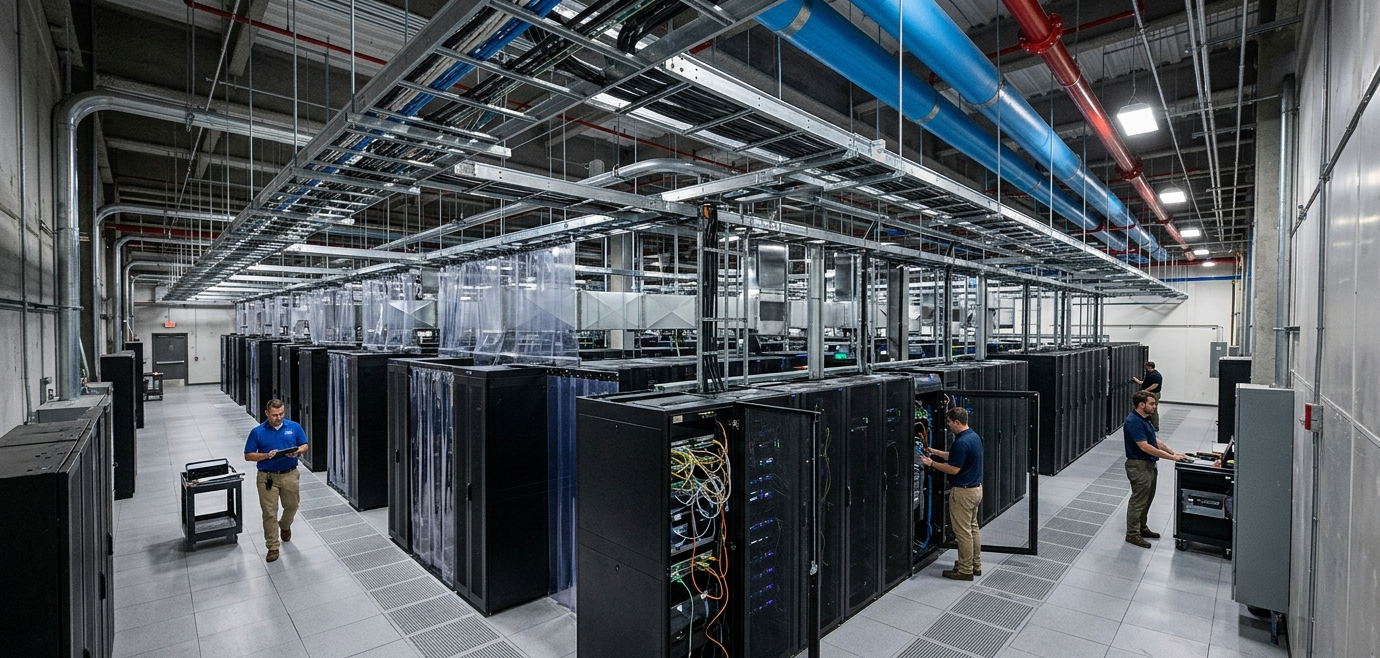
“What is inside a data center” is a question of importance as it helps you understand its functioning. But before moving ahead, let’s first think of the data center as having two main sides. While one side is responsible for all the digital work, the other side takes care of the smooth process.
Core IT Equipment
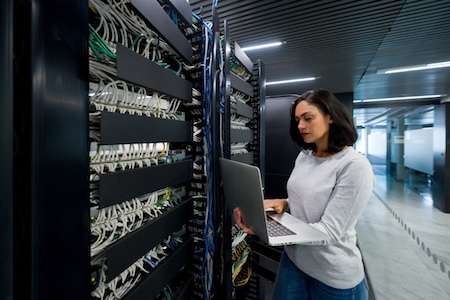
- Servers: Refers to high-power computers that run websites, apps, databases and company software. Whenever someone clicks a link or uses an app, these servers are there to work in the background.
- Storage systems: These systems are where data is saved, including files, customer information, backups and records. Data centers use fast storage so information can be opened and shared without much delay.
- Networking equipment: The list of equipment includes routers, switches, firewalls and cables that connect all the systems and link them to the internet. This helps data move quickly and stay secure.
Supporting Infrastructure
This part of the data center supports the machines and helps them work smoothly without breaks.
- Power systems: In Data centers, there is a main power supply along with UPS units, batteries and generators. These step in during power cuts so that services do not stop.
- Cooling and environment control: Special cooling systems manage heat and humidity to prevent machines from overheating.
- Physical security: Cameras, access cards and biometric checks make sure only authorised people can enter sensitive areas.
Types of Data Centers
Different businesses use different types of data centers based on size, budget, industry needs and technology plans.
- Enterprise data center: Owned and managed by a single company, it is usually located on company premises and supports internal systems and sensitive data.
- Colocation data center: A third-party facility where businesses rent space, power and cooling. Companies manage their own servers while using the provider’s infrastructure.
- Cloud data center: Large facilities run by cloud providers. Businesses access servers and storage over the internet and pay only for what they use.
- Managed or hosted data center: Here, the service provider owns and manages the infrastructure, including maintenance and support.
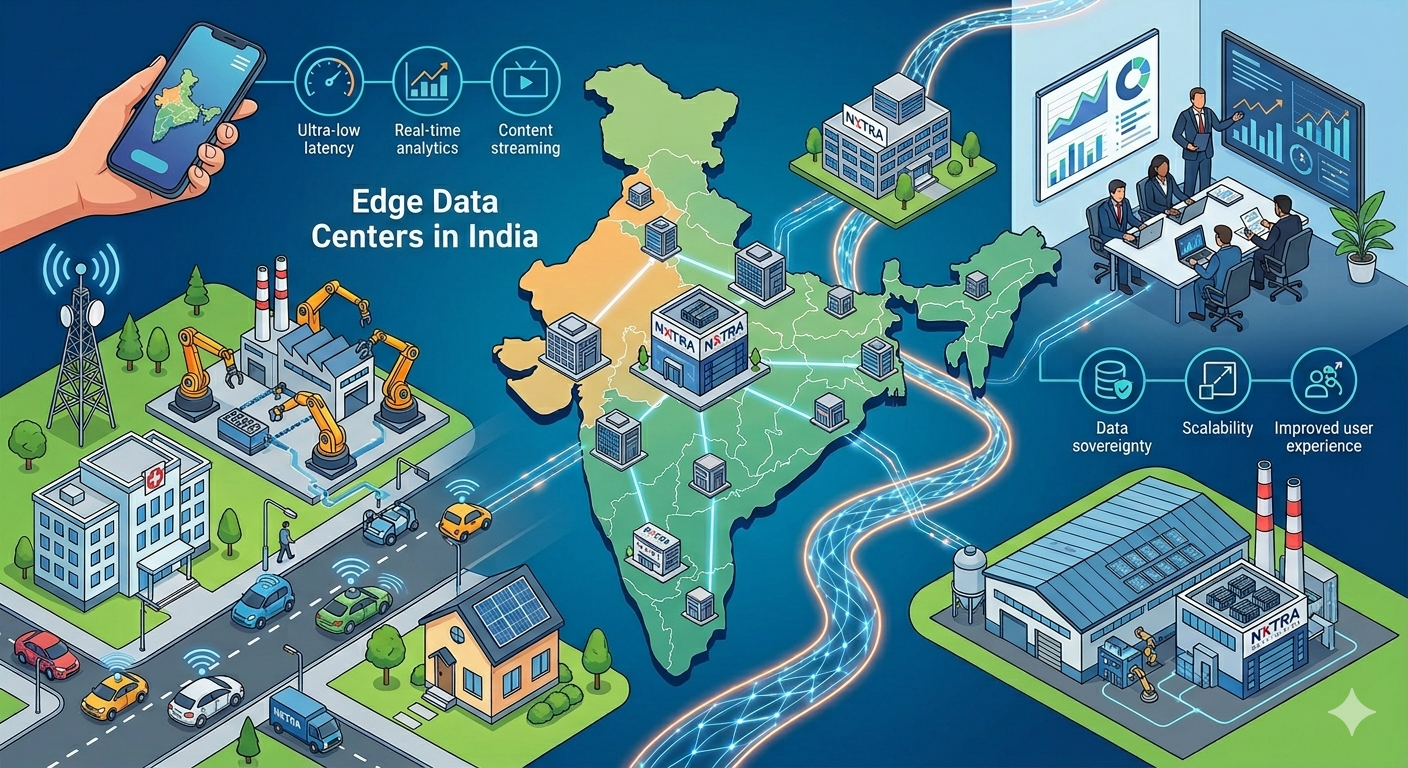
- Edge data center: Small data centers placed closer to users. They reduce delays for services like video streaming, IoT and real-time data processing.
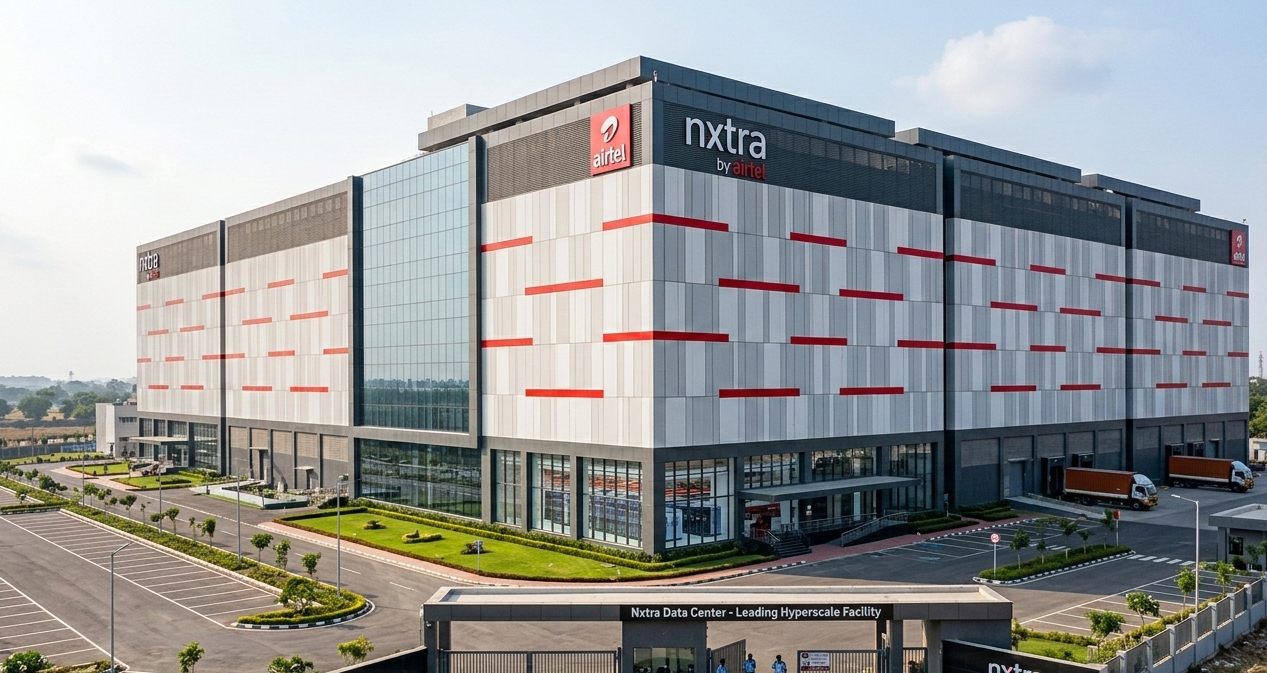
- Hyperscale data center: Very large facilities used by big technology companies. They support huge workloads, contain thousands of servers, and are built for fast growth and automation.
Note: Many companies use a mix of different data centers to balance cost, control, performance and flexibility.
How Does a Data Center Work?
To understand how a data center works, let’s look at what happens when someone uses a website or app.
- User request
- A user opens an app or website on a phone or computer.
- The request travels through the internet to the data center.
- Security systems first check the request to keep threats away.
- The request is then sent to a free server so no single system gets overloaded.
- Work happens inside the data center
- The server handles the request and does the required task.
- It pulls information from storage or databases if needed.
- High-speed networks help everything move fast inside the data center.
- Response to the user
- Once the work is completed, the result is sent back to the user.
- This could be in the form of a webpage loading, a payment success message or an app update.
Supporting technologies
Supporting technologies help everything run smoothly. Virtualization allows one server to run many systems at once, thereby improving hardware use. Monitoring tools track performance, power use and security so problems can be fixed early, thereby helping improve overall data center operations.
Why Understanding Data Center Matters?
Understanding what is a data center, the inside of a data center, the types of data centers and how does a data center work helps businesses and leaders make better digital decisions. It not only supports planning for cybersecurity and cloud use but also for cost control and compliance.
So, in a world where digital change is constant, this knowledge helps businesses build secure, scalable and reliable systems. It also supports innovation in AI, data analytics, automation and remote work. Overall, it makes sure technology strongly supports business growth.
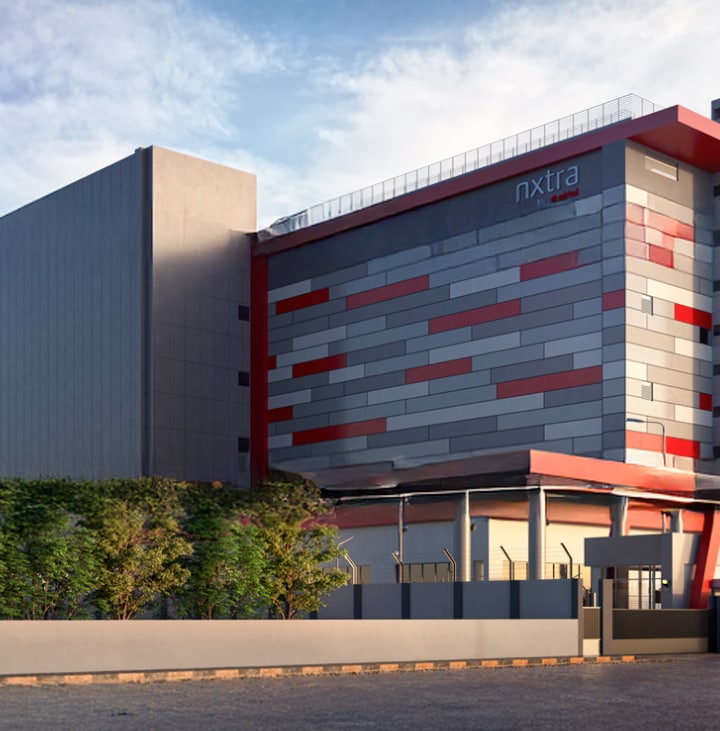
Nxtra by Airtel helps businesses understand and use reliable data center setups by providing them with secure facilities and stable power. They also get the support of a scalable space. This helps companies run their applications and store data smoothly and safe.
Key Takeaways
- Data centers support all the apps, websites and online services we use daily.
- They store data and process requests quickly and without breaks.
- Both IT equipment and physical systems work together to keep services running.
- Different types of data centers are used based on business size and needs.
- The more a business understands data centers, the better decisions it makes for its future.
FAQs (Frequently Asked Questions)
- What is the main purpose of a data center?
A data center has the responsibility of storing data and running applications so that websites, apps and other digital services can work all the time. It helps in processing user requests, managing large amounts of information, and ensuring business systems remain available without delays or breakdowns.
- Why is data center security important?
Data security is important as it keeps information safe by protecting data from system failures and unauthorised access. This includes both digital security, like firewalls and monitoring tools, and physical security, such as access controls and surveillance.
- Can small businesses use data centers?
Yes, small businesses can use shared or cloud-based facilities, and they do not have to own or manage them. Consequently, this allows businesses to scale their operations, reduce costs and focus on growth without worrying about managing complex IT setups.
- Why are data centers important for daily digital use?
Data centers make sure apps, websites, payments and other online services work smoothly without interruption. Without them, digital platforms would be slow, unreliable or completely unavailable.