Why Enterprises Are Moving from In-House Server Rooms to Modern Data Centers
 Jul 28, 2026
  5 min read
  Facebook
 Twitter
 LinkedIn
 Email
Email

For decades, having your own server room down the hall felt like the safest choice for a business. You could see the machines, control the access, and call your IT team the moment something went wrong. But that comfort is fading fast. Today, more enterprises are shutting down their in-house server rooms and moving to modern, purpose-built data centers instead. The reasons for this range from rising costs and power demands to the growing need for AI-ready infrastructure. This shift is not just a trend, as it is quickly becoming the standard way enterprises manage their IT.
The Server Room Problem
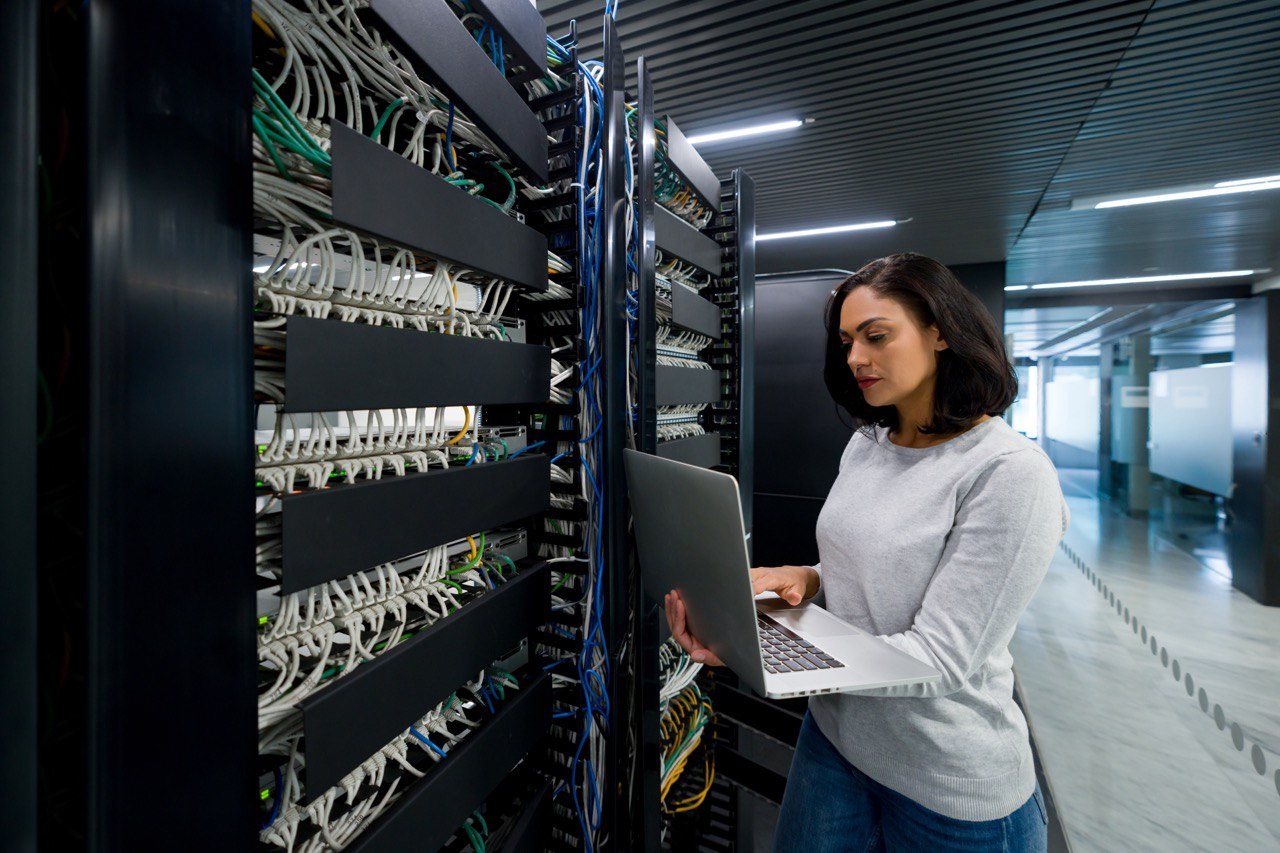
In-house server rooms were built for a different era, one where data needs were smaller and predictable. Most enterprises today are dealing with far more data, more applications, and much higher performance expectations. An usual server room simply was not designed to keep up.
Some common problems enterprises run into with in-house setups include:
- Limited power capacity, especially as servers get more power-hungry
- Basic cooling systems that struggle under high-density racks
- No real redundancy, so a single failure can take everything down
- High costs to upgrade, maintain, or expand the space
- Difficulty meeting compliance and data protection requirements
As workloads grow heavier, these limitations become harder to ignore.
Why Purpose-Built Data Centres Are Better Equipped
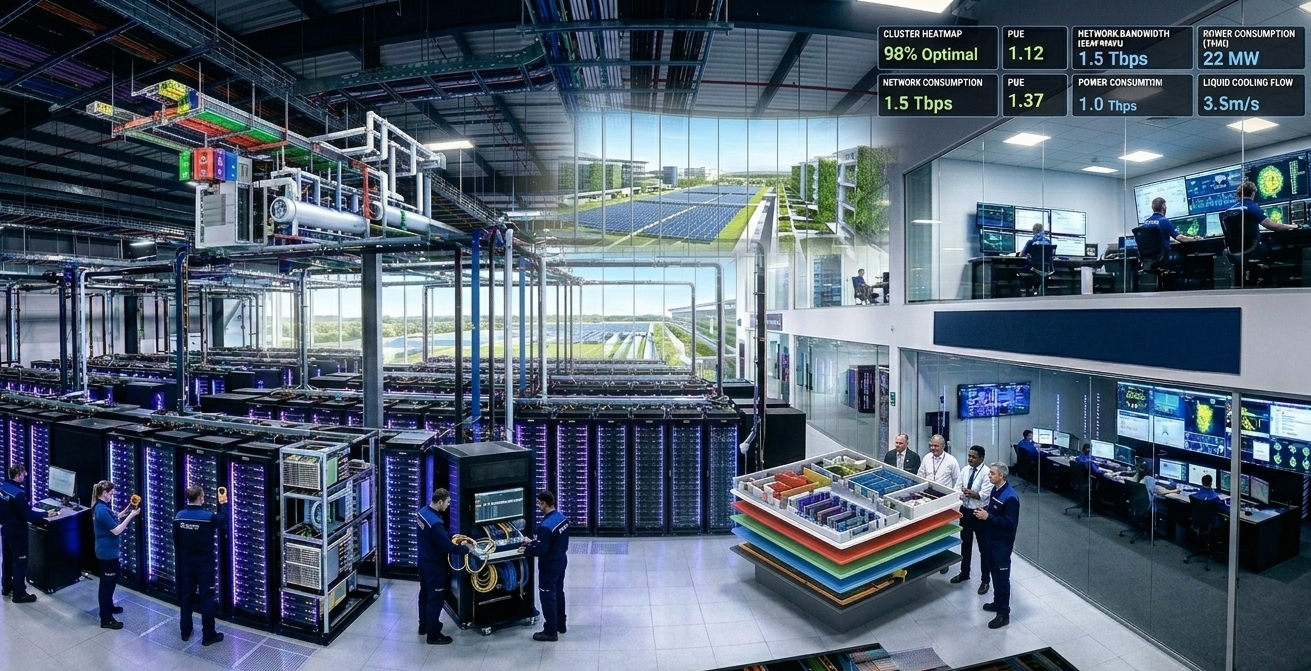
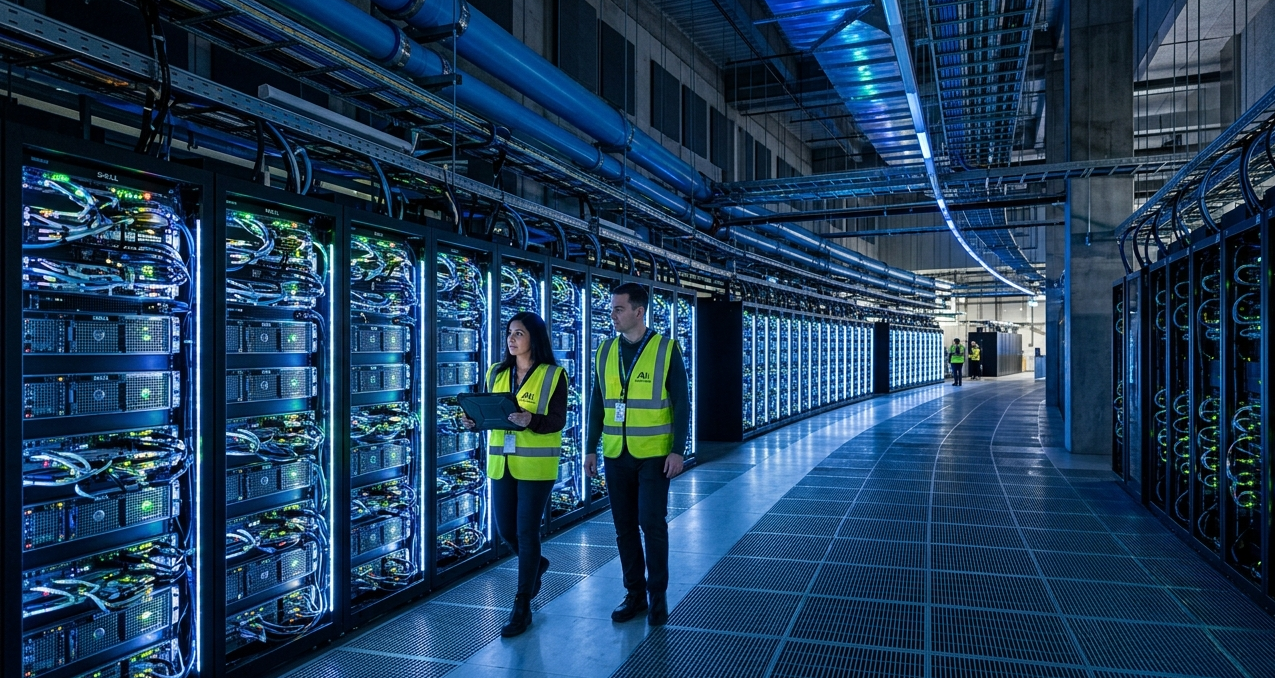
A purpose-built data centre provides the specialised power, cooling, security and operational systems that modern enterprise infrastructure requires. These facilities combine resilient power, advanced cooling, layered physical security and specialised operational expertise to maintain infrastructure availability.
Reliability and uptime
Data centers are designed with backup systems for power and cooling. If one component fails, another takes over instantly. Building comparable redundancy in-house can require significant investment, specialised expertise and ongoing maintenance.
Scalability
Enterprises rarely stay the same sizeA data centre allows enterprises to expand rack space, power and cooling capacity without repeatedly developing and operating new facilities. This flexibility is one of the biggest reasons enterprises make the switch.
Cost efficiency
Running an in-house server room means paying for real estate, power, cooling, hardware refreshes, and specialized staff, whether the servers are being used at full capacity or not. Data centers convert these fixed costs into more predictable, usage-based expenses.
Security and compliance
Modern data centers come with physical security layers, monitored access, and certifications that help enterprises meet regulatory requirements like data localization and industry-specific compliance standards. Building this level of security in-house is costly and hard to maintain consistently.
Support for AI and high-density workloads
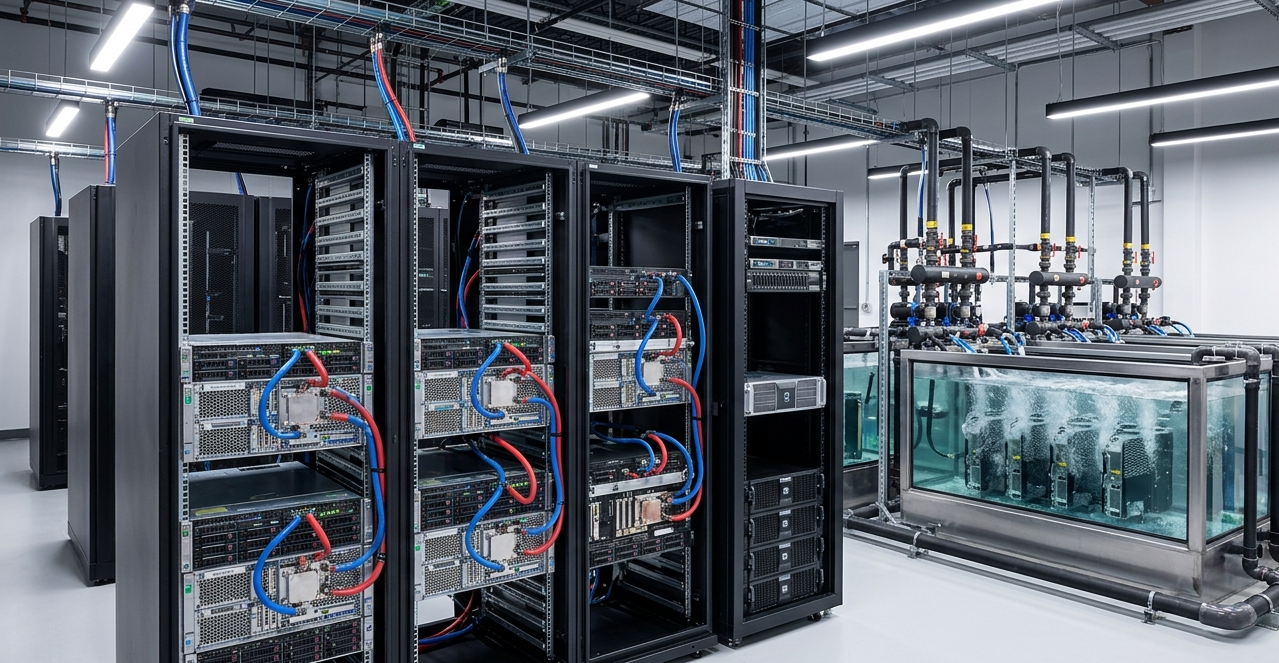
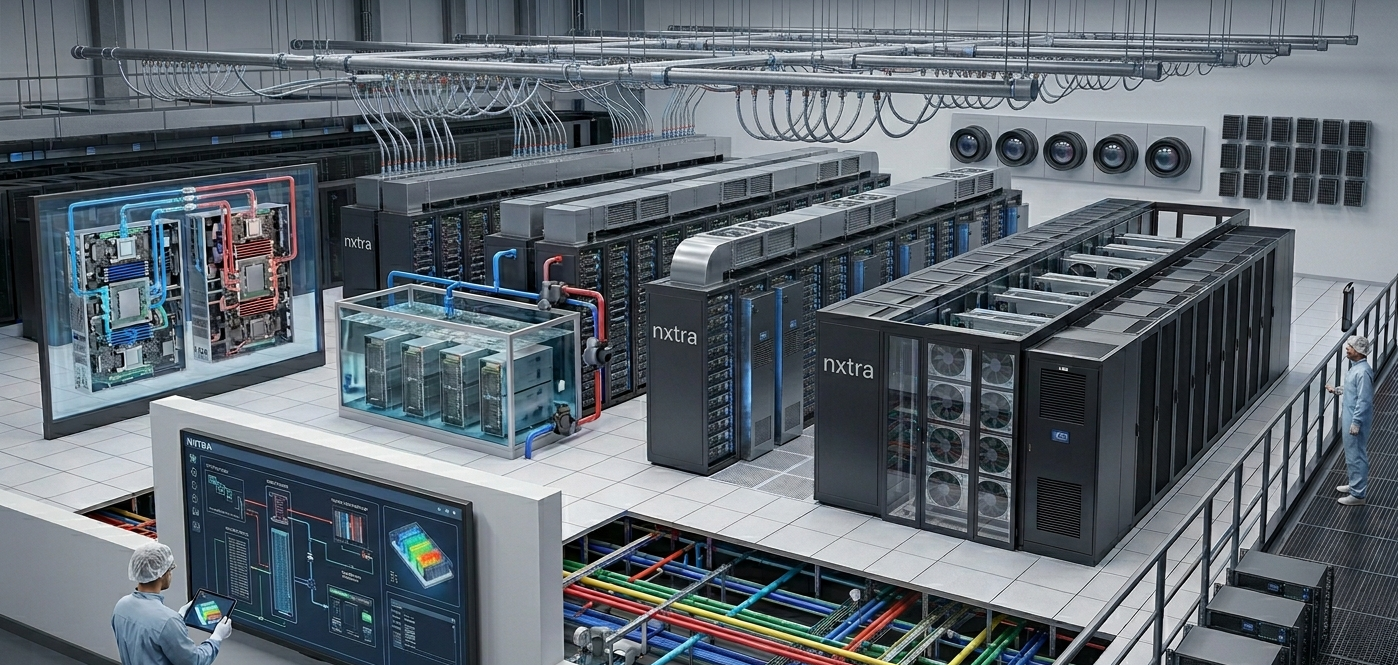
AI and machine-learning workloads require significantly greater computing density, power availability and cooling capacity than most conventional server rooms can support. AI-ready data centres can support high-density racks through scalable power and advanced cooling architectures, including direct-to-chip and immersion cooling.
The Bigger Picture: India’s Data Center Boom
This shift is not just happening at the individual enterprise level. India’s data center market is expanding rapidly, driven largely by AI adoption and enterprise digital transformation.Industry estimates point to continued growth in India’s data centre market as enterprises, digital platforms and technology providers expand their infrastructure requirements. Growth is increasingly driven by AI workloads, cloud region localization, data sovereignty requirements, and enterprise digital transformation rather than connectivity alone.
Global players are taking note too. The expansion of data centers in India is being driven by growing digitalisation and rapid AI adoption across government and private sectors, along with increasing adoption of cloud services. Large investments from global technology companies are pouring into the country’s AI and data infrastructure ecosystem, reinforcing just how central data centers have become to enterprise strategy.
For enterprises, this means the shift away from in-house server rooms is not a passing phase. It is part of a much larger transformation in how businesses handle data, computing, and digital growth.
Making the Move: What Enterprises Should Consider
Moving from an in-house server room to a data center is a big decision, and it helps to plan carefully. Enterprises should think through:
- Current and future compute needs, including AI workloads
- Compliance and data residency requirements
- Budget for migration versus long-term savings
- Choosing a provider with strong uptime guarantees and support
- Planning a phased migration to avoid business disruption
How Nxtra by Airtel Helps Enterprises Make the Shift
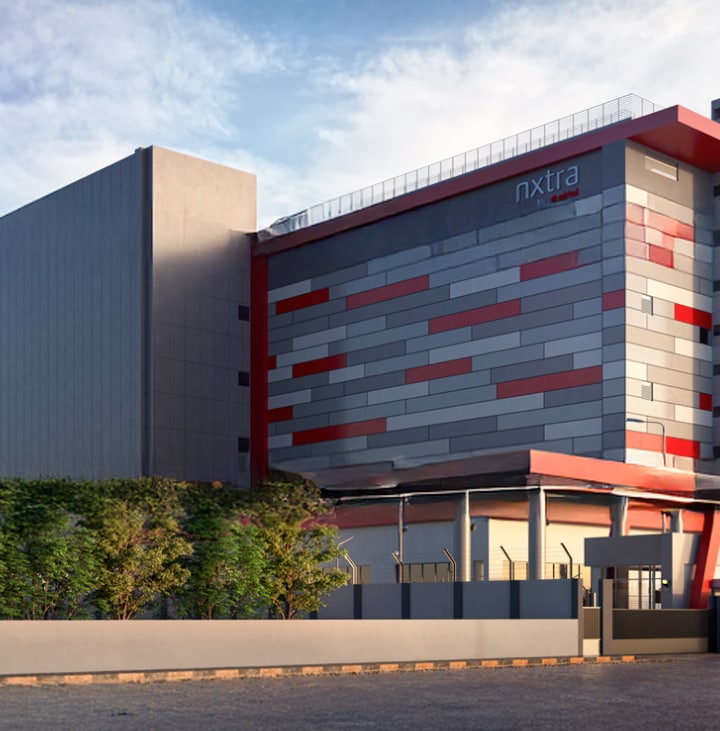
Nxtra by Airtel supports enterprises through exactly this kind of transition, offering data center infrastructure built to handle modern, high-performance workloads. With 15 hyperscale and 120+ edge data centres across 65+ cities, Nxtra provides resilient power, advanced cooling, layered physical security and consistent operational support across India.
Beyond the basics, Nxtra is also built with the future in mind. Its infrastructure supports AI-ready and high-density computing needs, helping enterprises scale as their workloads grow more demanding. For businesses looking for a smooth, dependable move away from traditional server rooms, Nxtra by Airtel offers the kind of enterprise-grade reliability and scalability that modern digital operations require.
FAQs
-
In-house server rooms often lack the redundancy, cooling capacity, and scalability that modern workloads demand. Enterprises are moving to data centers to get better reliability, security, and cost efficiency.
-
The economics depend on an enterprise’s scale, capacity requirements and existing infrastructure. While migration involves upfront planning, data centers convert unpredictable costs like hardware upgrades and specialized staffing into more predictable, usage-based expenses.
-
Data centers are built with high-density racks and advanced cooling systems, including liquid cooling, that can handle the intense power and processing demands of AI and machine learning workloads, something most in-house rooms cannot support.
-
Key factors include uptime guarantees, security certifications, compliance support, scalability options, and the provider’s track record for reliability.