How Built-to-Suit Data Centers Help Businesses Meet Custom Infrastructure Needs
 Jul 2, 2026
  4 min read
  Facebook
 Twitter
 LinkedIn
 Email
Email

As enterprises scale their digital operations, standardised colocation configurations may not always meet their technical, operational or compliance requirements. Some enterprises need specific power densities, unique cooling systems, or facilities located in a particular region for compliance reasons. This is where a build-to-suit data center comes to the picture. Instead of adjusting to what is already available, businesses get infrastructure designed and constructed around their exact requirements, from power capacity to physical layout. For companies running AI workloads, large-scale cloud platforms, or mission-critical applications, a build-to-suit approach ensures the data center works for the business, not the other way around.
What Is a Build-to-Suit Data Center?
A built-to-suit data centre solution is a customised colocation environment designed around a customer’s technical, operational and compliance requirements. Unlike a standardised colocation deployment, it can provide customised halls, floors, suites or entire data center buildings. The environment can be designed, modified and scaled to meet the customer’s specific infrastructure requirements.
This includes decisions on power capacity, rack density, cooling systems, redundancy levels, and even the physical location of the facility. Everything from site selection to final commissioning is aligned with what the customer’s workloads demand.
Built-to-suit models are well suited to hyperscalers and large enterprises with high-density, large-scale or specialised infrastructure requirements, since these workloads often need power densities and cooling configurations that standard facilities cannot support without significant retrofitting.
Why Businesses Choose Build-to-Suit Facilities
1. Custom power and density requirements
AI and high-performance computing workloads often require power densities far higher than traditional enterprise applications. A built-to-suit environment can be configured around specific power, cooling and rack-density requirements from the outset.
2. Location and compliance requirements
Some businesses need their infrastructure in a particular city or region, whether for data residency laws, regulatory compliance, or to reduce latency for regional users. Built-to-suit deployments can be planned within suitable locations based on site availability, power, capacity and business requirements.
3. Long-term scalability planning
Because the environment is designed around the customer’s infrastructure roadmap, future expansion can be considered during the initial planning stage. Additional white space, power and cooling capacity can be incorporated into the design to support planned growth.
4. Dedicated infrastructure and security
A built-to-suit solution can provide dedicated halls, floors, suites or buildings, depending on the customer’s requirements. This gives enterprises greater control over security configurations, access policies, technology integration and operating procedures.
5. Designed cooling and sustainability integration
Cooling requirements vary significantly between traditional IT loads and dense AI workloads. Build-to-suit facilities can incorporate liquid cooling, immersion cooling, or other advanced systems designed specifically for the anticipated workload, along with sustainability features suited to the business’s environmental goals.
Build-to-Suit vs Traditional Colocation
| Factor | Build-to-Suit | Traditional Colocation |
| Design | Customised around specific customer requirements | Standardized, shared |
| Power Density | Designed according to workload | Fixed, general purpose |
| Location | Selected based on customer needs and site feasibility | Limited to existing sites |
| Cost Structure | Custom commercial structure, typically involving longer-term commitments | Pay-as-you-go, shared costs |
Standard colocation is suitable for enterprises that can use existing configurations and require faster deployment. Built-to-suit is better suited to customers with specialised, large-scale or long-term requirements that need greater customisation.
Who Should Consider Build-to-Suit Data Centers
Build-to-suit facilities are generally suited for:
- Hyperscalers and cloud providers running large AI training or inference workloads
- Enterprises with strict data residency or regulatory requirements
- Businesses needing dedicated high-density infrastructure for specialized applications
- Organizations planning significant infrastructure growth over the next several years
- Organisations in regulated sectors that require dedicated space, customised access controls or specific operating procedures
Key Considerations Before Choosing Build-to-Suit
Before selecting a built-to-suit model, enterprises should evaluate:
- Timeline: Designing and delivering a customised environment generally requires more time than deploying within ready-to-use colocation space.
- Capital commitment: Built-to-suit deployments generally require greater scale and longer-term commercial commitments than standard colocation.
- Partner expertise: The provider’s expertise across design, power and cooling planning, integration, commissioning and operations directly affects delivery quality.
- Future flexibility: Even a customized facility should have room to adapt as workloads and technology evolve.
Conclusion
Built-to-suit data centres give enterprises greater flexibility to configure infrastructure around their operational, compliance and technical requirements. While the model requires more time and higher upfront investment than traditional colocation, it offers long-term advantages in scalability, security, and performance for organizations with specific or large-scale requirements.
How Nxtra by Airtel Helps
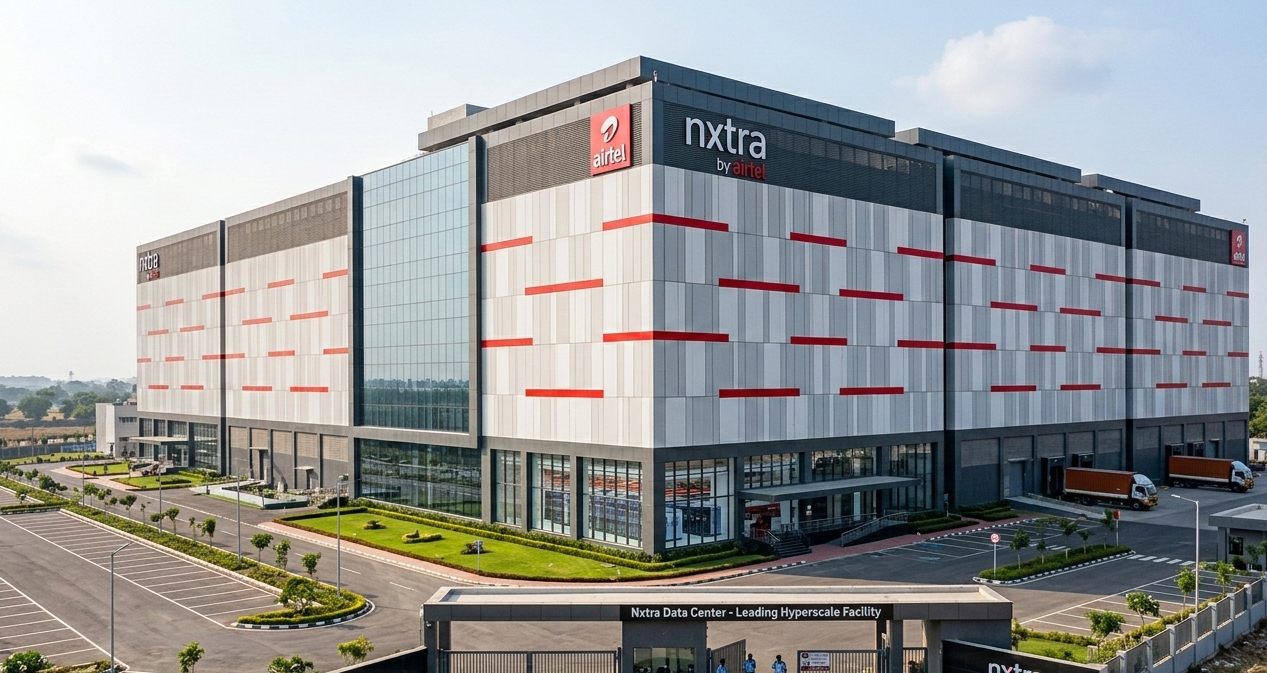
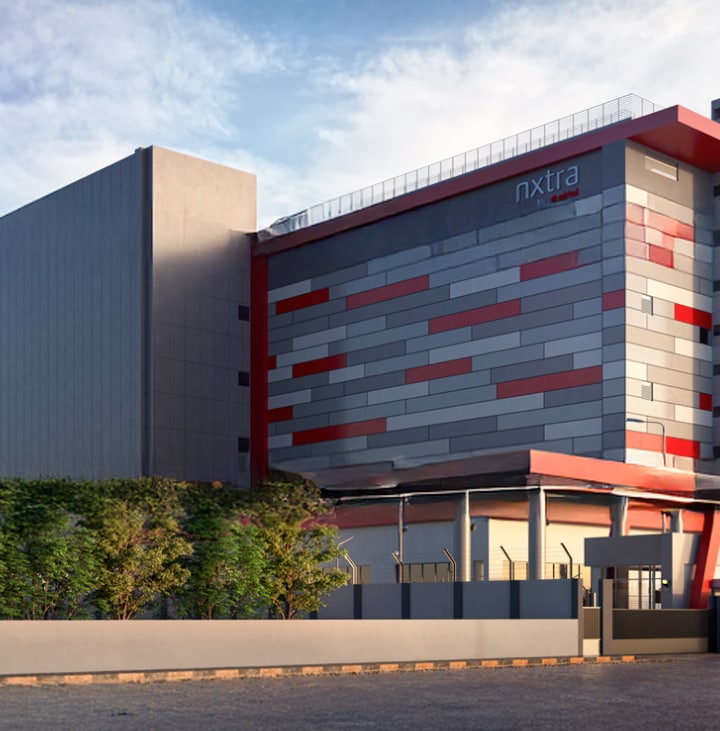
Nxtra by Airtel offers build-to-suit data center solutions designed around the specific power, density, and location needs of large enterprises and hyperscale customers. From design and integration to maintenance and ongoing operations, Nxtra delivers customized halls, floors and data center buildings aligned with each customer’s current requirements and expansion plans. Its focus on sustainable design and scalable infrastructure makes it a strong partner for organizations looking to build custom data center capacity without compromising on reliability or long-term flexibility.
FAQs
-
A built-to-suit data center is a customized colocation environment designed around a customer’s space, power, cooling, security and operational requirements.
-
Standard colocation uses existing facility configurations, while built-to-suit allows halls, floors, suites or entire buildings to be customised around specific customer requirements.
-
Hyperscalers, large enterprises with high-density AI workloads, and organizations with strict regulatory or location requirements are the most common users of build-to-suit facilities.
-
Timelines depend on the scale and degree of customization. Modifying an existing hall may be faster than designing and constructing an entirely new data centre building.