Edge-to-Core: How Edge Computing + 5G Are Reshaping India’s Data Center Landscape
 Feb 27, 2026
 6 min read
  Facebook
 Twitter
 LinkedIn
 Email
Email

The digital world across the globe is growing faster than ever and India is no exception. People use mobile apps, digital payments, video streaming platforms and smart devices every day. Apart from personal uses, businesses also are embracing IoT and AI technologies to improve how they work. With all these activities, huge amounts of data is created that is supposed to be processed quickly and safely.
In India, this growth in technology is supported with the change in data center setup. Earlier, most data was handled by large data centers located in a few major cities. Today, that model alone is not enough. This is where the edge-to-core approach comes in. It combines local data processing with powerful central facilities, supported by 5G and edge computing. As a result of this, they together help deliver faster services and better performance.
Why the Traditional Model Is Changing
Earlier, data had to travel long distances from users to reach the main data center. This was quite effective and worked well for basic online services. But with modern applications, quick responses are required. When a large quantity of data travels across networks, it may result in more delays and low performance.
For example, smart factories, live video monitoring and connected city systems cannot afford even small delays. They need data to be processed almost instantly. Sending everything to a faraway location simply does not work anymore.
On account of this challenge, the adoption of 5G and edge computing has increased. On one hand, 5G provides high-speed connectivity, edge computing brings computing power closer to users on the other hand. This certainly reduces delays and improves reliability.
What Edge-to-Core Really Means
This edge-to-core model is all about maintaining balance. So, instead of choosing between edge or central data centers, businesses use both.
In this model:
- Edge locations handle urgent work close to users or devices.
- Core data centers take care of big tasks like storing data and very detailed analysis.
Hence, more edge sites and micro data centers have been set up near cities, factories, office campuses, etc. in India. These smaller data centers work closely with large data centers, and help data move smoothly and quickly across the network.
Why 5G and Edge Computing Work Better Together
As referred earlier, 5G and edge computing are closely connected. Though 5G offers speed and supports many connected devices, real benefits come when data is processed nearby. Here’s how they support each other:
- 5G moves data quickly and reduces delays.
- Edge computing helps in processing data nearby instead of sending it far away.
- Hand-in-hand, they make real-time services possible like live video checks, online gaming, etc.
Let’s understand it through an example:
Video from security cameras can be checked at a nearby edge location. Only important information is sent to the main data center. This makes IoT data processing faster and doesn’t overload the network.
Growing Importance of Edge Data Centers
Large data centers in cities like Mumbai, Chennai and Hyderabad are important and they remain so. But today’s digital services need data to be processed faster and closer to users. This is where edge data centers help. These are small data centers that can be set up quickly in different places. Common features include:
- Small size and quick setup
- Located near factories, offices, malls or telecom towers
- Able to handle local data smoothly
By processing data closer to where it is created, edge data centers help in reducing delays and improving service quality. They also help businesses follow data storage and compliance rules more easily.
How IoT Data Processing Benefits from Edge
IoT devices are used on a daily basis today. Sensors, cameras and machines create data all the time. But for this data to become useful, it must be processed quickly.
Edge computing helps here in IoT data processing by handling important tasks close to where the data is created.
Examples include:
- Manufacturing: Watching machines in real time to prevent breakdowns
- Smart cities: Managing traffic, safety and energy more quickly
- Healthcare: Processing data from medical devices for faster action
Imagine all this data being sent to a central data center, it would certainly cause delays. With edge computing, this is avoided by processing key data nearby and sending only what is needed to the main data center.
How Data Center Design Is Changing in India
The edge-to-core approach is changing how data centers are planned and built in India. Instead of a few large locations, infrastructure is now spread across multiple layers, from devices to edge locations and then to central data centers. Workloads are placed smartly based on how fast they need to run and how sensitive the data is. Data centers are also more closely connected with telecom networks. This shift has increased the use of automation and remote management, thereby making it easier to run many small data centers efficiently.
Sustainability and Efficiency Benefits
- Data is processed closer to users, so less energy is used
- Shorter data travel reduces network power usage
- Smaller edge facilities are easier to cool
- Supports energy-efficient designs
- Makes the edge-to-core model faster and more sustainable
What the Future Looks Like
As 5G and edge computing grow across India, more businesses will start using real-time digital solutions. AI will run more often at the edge centers, while central data centers will continue to handle storage and deeper analysis. In the coming years, micro and edge data centers are set to become common in cities and industrial areas, edge systems would play a bigger role in IoT data processing and core data centers would remain important for large-scale and reliable operations.
How Nxtra by Airtel Can Help
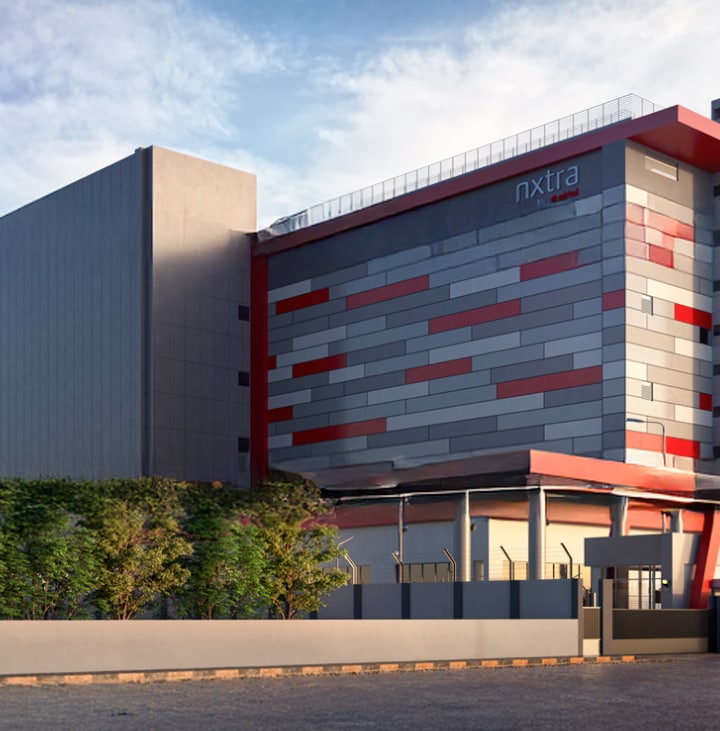
Nxtra by Airtel is playing an important role in this edge-to-core model by offering a strong data center infrastructure with 120+ edge data centres across multiple locations in India. Its facilities are designed to support low-latency connectivity and scalable capacity, which can be useful for businesses adopting 5G and edge computing.
Moreover, with a focus on reliability and security, Nxtra by Airtel provides an environment where edge and core workloads can work together smoothly with increase in digital needs.
FAQs (Frequently Asked Questions)
- What does edge-to-core mean in data centers?
In data centers, edge-to-core basically means some data is processed close to users at the edge, while bigger tasks are handled by large central data centers. This has been embraced to balance speed and capacity.
- Why are 5G and edge computing used together?
While 5G provides high-speed connectivity, edge computing reduces the distance data needs to travel. Hence, 5G and edge computing are used together to make data move faster and get processed nearby, thereby reducing delays.
- What are edge data centers?
Edge data centers are small data centers placed near users to quickly process local data. As these centers are closer to users, they help in reducing lag and improving response time.
- How does edge computing help with IoT data processing?
Edge computing processes IoT data near the source, instead of sending the data to a distant center. With this, data gets processed faster. Consequently, devices react quiuckly and systems become more reliable and smoother to run.